

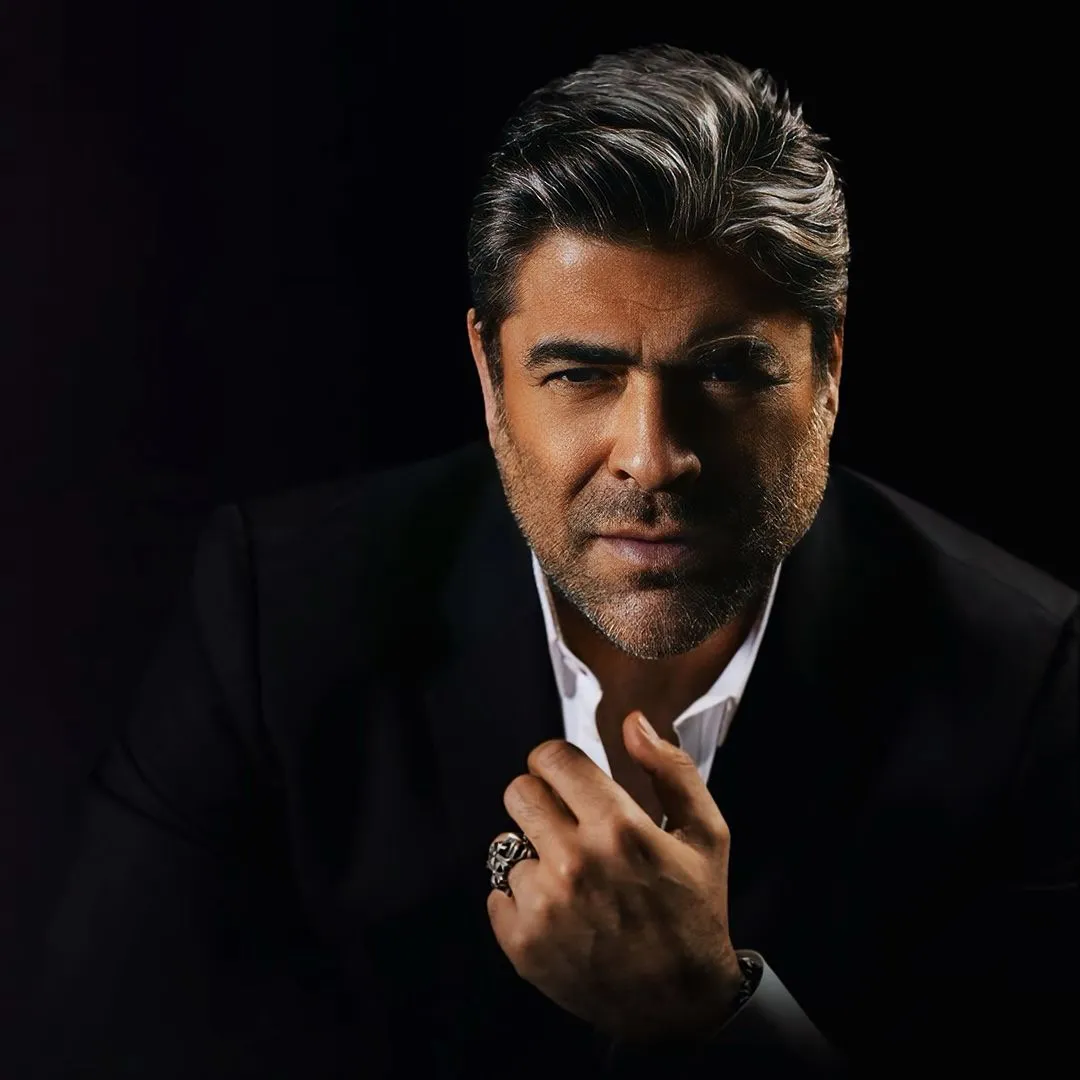
Artist Wael Kfoury
All events of Artist Wael Kfoury
No events found
Artist Wael Kfoury does not have any events scheduled at the moment.

100% protected tickets
If anything happens, we've got you covered.
Wael Kfoury Tickets 2026 — Book a Night with the King of Romance
When Wael Kfoury walks onto the stage, the audience needs very little time to enter the mood of the concert. The first line in his warm mountain voice is often enough for the venue to begin singing back, turning the night into a blend of romance, Lebanese mawwal and rhythms that make it difficult to remain seated. That is why Wael Kfoury tickets are among the most sought-after Arabic concert tickets whenever he appears in Saudi Arabia, the UAE, Qatar, Bahrain or Lebanon.
Kfoury has a catalogue spanning more than three decades. His audience includes listeners who discovered him through Studio El Fan and his 1990s albums, alongside younger fans who found him through songs such as El Bint El Awiye, Sett El Kel and El Waet Hadiye. This broad appeal gives his concerts a distinctive quality: every song carries a memory for one generation, while his voice and stage presence connect them all.
The Lebanese star remained active in 2026 with releases including Chou Meshta2li and Sare2li Omri, after welcoming the year with a Dubai concert alongside Najwa Karam. His continuing stream of music and live performances means the set does not stop at the classics; it evolves every season without losing the songs the audience waits to hear.
Through FansPass, you can follow available concerts and compare Wael Kfoury ticket categories, prices, seat locations and delivery methods before buying. The city, venue, age policy and door time differ from one concert to another, so the individual event page always remains the final reference.
Who Is Wael Kfoury?
Wael Kfoury, whose real name is Michel Emile Kfoury, is a Lebanese singer from Zahle in the Beqaa region. His public breakthrough came through Studio El Fan in the 1992-1993 season, when he won the gold medal in the Lebanese folk-song category and began a career that would make him one of Arabic romantic music’s defining voices.
He studied music and solfeggio, training that can be heard in his vocal precision and his ability to move between an emotional pop song and a wide-ranging Lebanese mawwal. Across his career, he has protected a clear Lebanese identity while presenting it in a form that travels naturally across the Arab world.
Wael Kfoury became known as the “King of Romance,” not because every song is slow, but because his tone and phrasing turn an emotional song into a full theatrical experience. In one concert he can move from an intimate ballad to an upbeat number, then return to a mawwal that places the voice at the centre of the room.
Wael Kfoury: Early Life and Personal Story
Michel Emile Kfoury was born on 14 September 1974 in Zahle, the Lebanese city known for its Beqaa landscape and musical heritage. He adopted Wael as his stage name but remained closely associated with Zahle in the public imagination. Recordings from his hometown concerts later became live albums documenting his relationship with both the city and the Lebanese mawwal.
His vocal ability was supported by formal study. He pursued solfeggio at Holy Spirit University of Kaslik and the Lebanese National Higher Conservatory of Music, and worked in music education during one stage of his life. This training helped him understand maqam, breath and rhythm, which is evident when he extends a line or moves between low and high registers without losing the clarity of the words.
Studio El Fan transformed that preparation and talent into a national opportunity. The programme was more than a television appearance; it was one of Lebanon’s most important gateways into the music industry. Winning the gold medal in the Lebanese folk category led to a recording opportunity and introduced a young singer who combined the image of a star with a trained voice.
Kfoury completed mandatory service in the Lebanese army. The period became associated with Rayeh Aal Jeysh, a song addressed to young men facing the same experience, and the track gained widespread popularity. After completing his service, he returned to recording and touring, with the late 1990s and early 2000s establishing him among the Arab world’s leading singers.
In his family life, Wael Kfoury married Angela George Bechara in 2011. They had two daughters, Michele and Milana, before their separation was confirmed in 2019 in Arab media. Although public interest in his personal life remains high, he is known for keeping his family away from constant publicity. His private life is therefore best treated as human context around the career, rather than content that overshadows his music.
That privacy is part of his public character. He has never depended on daily exposure or the disclosure of personal detail to remain relevant. Music and concerts come first, while interviews and appearances are selective. This sense of anticipation may be one reason new releases and performances still attract attention more than thirty years after his debut.
Wael Kfoury Albums in Detail
Wael Kfoury’s legend cannot be understood through standalone hits alone. His albums reveal the movement from Lebanese folk colour toward Arabic romantic pop, and how he retained a mountain voice while production and listening habits shifted from cassette tapes to digital platforms.
Shafouha w Sarou Y’oulou 1994 — An identity begins
His first album, Shafouha w Sarou Y’oulou, arrived in 1994 after his Studio El Fan success. The early period also included Ma Waadtak Bi Njoum El Leil, which introduced listeners to the voice and established emotional phrasing, high-register intensity and mawwal as core parts of his musical personality.
The debut remained closely connected to Lebanese culture in its melody, dialect and delivery, yet its presentation allowed it to travel beyond Lebanon. This became the formula that continued throughout his career: a clearly local identity carried by a voice with pan-Arab reach.
Mayyet Fiki 1995 and the consolidation years
Mayyet Fiki followed in 1995 and confirmed that the debut was not a passing moment. The title captures the direct emotional language that became associated with his work: love, longing and confession with little distance between singer and listener. Audiences now treated him as a recording star in his own right, rather than simply a talent-show winner.
Other releases followed through the second half of the 1990s, including Baad El Sentein, before Shobbak El Hob in 1998. His 1997 duet Meen Habibi Ana with Nawal El Zoghbi was another major landmark. It brought together two successful voices in a musical conversation that remained part of the live and personal memories of an entire generation.
Shobbak El Hob 1998 and Hikayat Asheq 1999
By Shobbak El Hob, Kfoury’s musical world had become unmistakable: Lebanese emotion, memorable melodies and a voice capable of lifting romantic pop into theatrical performance. Hikayat Asheq followed in 1999 with a title that could almost describe his career as a whole, because the image of the lover remained central even as writers, composers and production styles changed.
The period also preceded a major transformation in Arabic music, with music television and video clips becoming increasingly important. Wael entered that era with a stable identity. He did not have to reinvent himself completely; he modernised the arrangement and presentation around a voice the audience already recognised.
The 2000s: Continuous releases and pan-Arab presence
Between 2000 and 2007, Wael released albums regularly, sometimes delivering more than one project or collection within a short period. These years cemented his pan-Arab status and broadened the balance between quiet romance, rhythmic songs and mawwal.
Sho Ra’yak in 2001 was an important stage, linked with broader experiments in writing and composition and showing that his relationship with a song extended beyond interpretation. The archive also includes live recordings from Zahle, valuable for listeners who want to hear the difference between a studio version and the freedom of live improvisation.
Omri Kellou 2003 — An album that stayed
Omri Kellou is among Wael Kfoury’s most enduring titles, and its central song became one of the pieces most frequently requested at concerts. It demonstrates the power of a simple phrase carrying a sweeping emotional promise, supported by an arrangement that keeps the voice in front.
The continuing life of Omri Kellou illustrates his cross-generational appeal. Some listeners first heard it on cassette or CD, while younger audiences reached it through streaming playlists and short-form video. It still has the ability to move an entire venue when its opening notes begin.
Qorb Leyi 2004 and artistic maturity
Qorb Leyi arrived in 2004, at a point when Wael was already a headline act across Arab concert stages. The album carries the intimacy and longing that suit his vocal texture, offering maturity without abandoning the identity responsible for his early success.
By this stage, the challenge was no longer proving that he could sing. It was choosing material that protected his place in a rapidly changing market. Compositions continued to be built around his range, while production became more modern and more suited to radio and music television.
The 2005 album and Bihinn 2007
Streaming catalogues list a self-titled Wael Kfoury album from 2005, followed by Bihinn in 2007. These releases represent the closing stretch of a dense album era before the industry shifted toward the greater impact of individual singles. Live performances, however, remained steady even when his studio visits became less frequent.
This distinction is essential to understanding his career: Wael is not only a recording artist. His stage power kept him visible even when the gap between albums grew longer, because audiences bought tickets to hear live versions, improvised mawawil and interactions unavailable in a studio recording.
Returning to albums: 2012, Wael 2015 and W
He returned in 2012 with a self-titled album, followed by the Wael 2015 project, which some platforms date to 2014, and W in 2017. This phase reflects his transition into a market where digital songs, video and streaming had become central, while the album remained a space for bringing several artistic moods together.
W included work such as Kazaben, while Law Hobna Ghalta achieved wide popularity in 2017. These songs re-established his position for a new audience and proved that the romantic title did not require him to remain inside an outdated musical form.
Live albums and Forum de Beyrouth
Alongside studio albums, his catalogue contains significant live recordings, including the Zahle concerts and Forum De Beyrouth 2023 - Live, followed by the Forum De Beyrouth 2024 project released on streaming platforms in 2025. These recordings reveal the essential live Wael: greater freedom in phrasing, a full band and an audience that becomes a partner in the song.
Some fans therefore prefer a live version of a familiar track because it includes an introduction, mawwal or moment of interaction absent from the original. That is precisely why buying Wael Kfoury tickets is a different experience from playing a playlist at home.
From Albums to Standalone Singles
As the music business changed, Wael increasingly used standalone releases to reach listeners quickly. El Bint El Awiye became a major hit in 2021, followed by Sett El Kel in 2022 and later songs such as El Waet Hadiye. The approach kept him present without requiring a long album cycle.
In 2026 he continued with several releases, including Chou Nater, the theme for Bel Haram, alongside Chou Meshta2li, Sare2li Omri and Mafi Ghayra. This activity gives his 2026 concerts new material that can sit beside classics spanning more than three decades.
Television Themes and Collaborations
Wael entered television drama themes in 2021 with Kelna Mnenjar for Downtown. His emotional voice carried the dramatic tension required by the story. He then performed Ewaa Tekhaf for Min... Ila in 2022 and Chou Nater for Bel Haram during Ramadan 2026.
His best-known collaboration began much earlier with Nawal El Zoghbi on Meen Habibi Ana. In 2021, he recorded Bardo Betewhashni with Angham, bringing together two major schools of Arabic vocal performance. More recent work involved poet-composer Rami Chalhoub, while the 2025 Joy Awards featured Wael and Michael Bublé performing a bilingual version of My Way, connecting his Lebanese voice with an international standard.
These projects reveal flexibility without erasing identity. He can perform a romantic duet, dramatic theme or global classic, but his tone, mawwal and phrasing keep the song recognisably his.
What Makes Wael Kfoury’s Voice Distinctive?
Kfoury has a warm baritone colour with the ability to rise into higher registers for emotional intensity. He does not use high notes merely as display; they often arrive at the end of an emotional phrase and turn a whisper into a full confession. Clear diction also keeps the words understandable through long notes and improvisation.
The mawwal is central to his stage identity. He may begin with a free passage before the rhythm enters, testing the room and preparing the audience for the song. This makes every concert slightly different because the mawwal responds to place, occasion and mood and cannot be duplicated exactly from one night to the next.
He also knows when to let the audience sing. In famous songs, he pauses at a particular line and the words rise from the venue before he returns to complete it. This exchange is one reason his concerts remain in demand: people do not attend only to listen, but to become part of music they have lived with for years.
What to Expect at a Wael Kfoury Concert
A Wael Kfoury concert is not a fixed playlist reproduced without change. It depends on live performance, mawwal, interaction and the audience singing back. Songs and running order vary with the length, city and nature of the event, but the experience usually draws from several stages of his career.
- Romantic songs: the space where his vocal warmth and attachment to melody and lyrics are most apparent.
- Lebanese mawawil: live passages that make every concert different.
- Rhythmic tracks: numbers that lift the room and change the pace of the evening.
- New songs: recent work added according to the timing of the concert.
- Audience interaction: requests, collective singing and spontaneous comments between songs.
At joint events, Wael may perform as part of a bill featuring another artist such as Najwa Karam, Elissa or Adam. Read the event description for the artist order and expected duration; a solo concert and a shared night do not necessarily present the same programme.
Wael Kfoury’s Most Famous Songs
It is difficult to reduce his career to one list, but the following songs remain deeply connected with his audience and frequently requested live:
- El Bint El Awiye.
- Omri Kellou.
- Law Hobna Ghalta.
- Qorb Leyi.
- Bhebbak Ana.
- Sett El Kel.
- Ma Fi Law.
- Sho Ra’yak.
- Qesset Oshaq.
- Kelna Mnenjar.
- El Waet Hadiye.
- Khodnie Leik.
- Meen Habibi Ana with Nawal El Zoghbi.
- Chou Meshta2li.
- Sare2li Omri.
This list is not a promised setlist. Song choice changes from night to night, but it demonstrates the balance between classics and contemporary releases in his concerts.
Wael Kfoury Concerts in the Gulf and Arab Region
Wael Kfoury has a wide Gulf audience and appears at major venues and seasons in Riyadh, Jeddah, Dubai, Abu Dhabi, Doha and Bahrain. He also performs at festivals in Lebanon, Tunisia and Morocco and tours beyond the Arab region.
Recent landmarks include the New Year 2026 concert with Najwa Karam at Festival Arena Dubai and a Bahrain appearance in May 2026, alongside previous concerts at Dubai Opera, Dubai World Trade Centre and Riyadh Season. At the January 2025 Joy Awards in Riyadh, he joined Michael Bublé for My Way in Arabic and English.
These appearances show the range from dedicated theatres and arenas to dinner concerts and open festivals. Every format has its own seating map, age policy and price structure, so never use information from an older event to make assumptions about a new one.
Wael Kfoury Concert Dates 2026
There is no single fixed date for all Wael Kfoury concerts. New shows may be announced during the season and operational details can change. When a concert appears on FansPass, confirm:
- City and country.
- Venue or theatre.
- Day, date and local time.
- Door and show times.
- Other participating artists if it is a shared event.
- Minimum age.
- Late admission and photography rules.
If you are travelling, avoid a tight itinerary before confirming the final schedule. Some events begin late, and the artist’s stage time can differ from the door time.
Wael Kfoury Ticket Prices
Prices vary widely according to city, venue, event format, seat and included services. An arena concert does not price like a New Year’s dinner, a front table or a hospitality package.
Recent examples show the range. Tickets for the Dubai New Year concert featuring Wael Kfoury and Najwa Karam ran from AED 495 to AED 2,500 per person, with different hospitality benefits and a two-ticket minimum in some categories. At a Riyadh Season concert with Elissa, standard categories reportedly began at SAR 295 and rose through several levels, while premium tables reached much higher figures.
For general planning, use these indicative ranges rather than fixed official prices:
- Standard seated concert: around SAR 250 to SAR 700 or equivalent.
- Closer or premium seats: around SAR 700 to SAR 1,500.
- Major shared concerts and special occasions: around SAR 500 to SAR 2,500 depending on category.
- Dinner, hospitality and New Year events: may begin around SAR 1,000 per person and exceed SAR 2,500, while full tables can cost considerably more.
Review the final price, fees and benefits. Do not compare admission-only tickets with a dinner or hospitality package, and never treat a historical event price as the expected price for a new concert.
How to Buy Wael Kfoury Tickets on FansPass
- Open the Wael Kfoury page: review available concerts across cities.
- Choose the event: confirm city, date, venue and participating artists.
- Select a category: compare seat location, services and price.
- Choose quantity: check minimum-purchase rules and adjacent seating.
- Read the age policy: confirm every attendee is eligible before payment.
- Add a discount code: apply one when valid.
- Enter details: provide accurate name and contact information.
- Review delivery: confirm the ticket format and delivery time.
- Check the total: review tickets and fees before payment.
- Pay and retain your order number: monitor your email and account.
Never share the ticket code on social media. A copied code could be used before you reach the venue.
How to Claim the Lowest Price for Wael Kfoury Tickets
If you find an identical listing at a lower final price, contact FansPass support under the Lowest Price Guarantee terms and prepare:
- The order email address.
- Name and phone number.
- FansPass order number.
- A live competitor listing.
- Screenshot of the final price after fees.
- Concert, date and quantity.
- Category, row and seat area.
- Hospitality benefits and delivery method.
Categories must match. A Royal dinner package cannot be compared with Silver admission, or a pre-fee headline price with a final total.
Why Buy Wael Kfoury Tickets from FansPass?
- Buyer guarantee: protection under the platform’s terms.
- Category comparison: see seat and price differences clearly.
- Cost transparency: review the final total before payment.
- Multi-city coverage: follow available shows in different countries.
- Resale: access additional listings and sell when attendance becomes impossible, subject to the rules.
- Customer support: help with order and delivery questions.
How to Sell Wael Kfoury Tickets If You Cannot Attend
- Sign in to FansPass.
- Open your profile and select ticket selling.
- Choose the correct Wael Kfoury concert.
- Add category, row, seat and quantity.
- Upload the required ownership evidence.
- State whether seats are together and list included benefits.
- Set the price and delivery method.
- Review and publish the listing.
- Complete delivery within the required deadline after sale.
Confirm that the event terms permit transfer or resale, particularly for named tickets, age-restricted shows or table and hospitality bookings.
Tips Before Attending a Wael Kfoury Concert
- Arrive early for unreserved areas or wristband collection.
- Check age rules; some dinner and New Year events are 21+.
- Dress for the venue type, whether theatre, outdoor festival or dinner show.
- Confirm venue location, transport and parking before leaving.
- Charge your phone and keep the ticket ready at the gate.
- Read the photography policy; phones may be allowed while professional equipment is prohibited.
- For multiple tickets, confirm adjacent seating before payment.
- Do not treat the door time as the artist’s stage time.
Wael Kfoury’s Musical Career
Kfoury began with Lebanese folk song, then expanded into one of Arabic romantic pop’s most important voices. His early work carried mountain vocals and Lebanese melody, while later production evolved without losing the personality recognisable from the first line.
Since the 1990s, releases such as Mayyet Fiki, Baad El Sentein, Hikayat Asheq, Sho Ra’yak, Omri Kellou and Qorb Leyi have defined different stages. Meen Habibi Ana with Nawal El Zoghbi also became one of the decade’s most famous Arabic duets.
More recently, he reached the streaming generation through El Bint El Awiye and Sett El Kel and entered television themes with Kelna Mnenjar for Downtown and Ewaa Tekhaf for Min... Ila. His 2026 releases prove that a concert is not simply a nostalgia journey, but an encounter with an artist still adding to his story.
Frequently Asked Questions
Where can I buy Wael Kfoury tickets?
You can follow available shows and buy Wael Kfoury tickets on FansPass, comparing categories and prices before payment.
How much is a Wael Kfoury ticket?
Price depends on city, seat and event format. Standard regional categories may begin around SAR 250-500, while premium and hospitality events can reach SAR 1,500-2,500 or more.
Does Wael Kfoury perform in Saudi Arabia?
Yes. He appears at Saudi concerts and events including Riyadh Season. Check available listings for confirmed dates and cities.
Does Wael Kfoury perform in Dubai?
Yes. Dubai has hosted him at Dubai Opera, Dubai World Trade Centre, Festival Arena and other venues.
What are Wael Kfoury’s most famous songs?
Popular titles include El Bint El Awiye, Omri Kellou, Law Hobna Ghalta, Qorb Leyi, Bhebbak Ana, Sett El Kel and Meen Habibi Ana.
What are Wael Kfoury’s latest 2026 songs?
His 2026 releases include Chou Nater, Chou Meshta2li, Sare2li Omri and Mafi Ghayra.
Is the concert setlist announced in advance?
Not always. The artist may change songs and running order according to time, event format and audience response.
Are Wael Kfoury concerts suitable for children?
It depends on the event. Some welcome families, while dinner and New Year shows may require guests to be 21 or older.
Can I choose my seat?
Some events allow a specific seat or section, while others sell by category or table. Review the map and listing.
Are tickets refundable?
Refund rules vary by event and organiser. Read the terms before paying; inability to attend does not automatically create a refund right.
Can I sell my ticket if I cannot attend?
You can list it on FansPass when the event terms permit transfer or resale and you meet delivery requirements.
Are Wael Kfoury concerts solo shows?
He performs both solo and on shared bills with other Arab stars. Check the event description for the full line-up.
When did Wael Kfoury’s career begin?
His public breakthrough came through Studio El Fan in 1992-1993 after winning the gold medal.
Why is Wael Kfoury called the King of Romance?
The title reflects his voice, delivery and a large catalogue of emotional songs that have remained popular across generations.
When is the best time to buy tickets?
Buy after confirming the schedule and your plans, particularly for shared concerts and special occasions where inventory can fall quickly.