

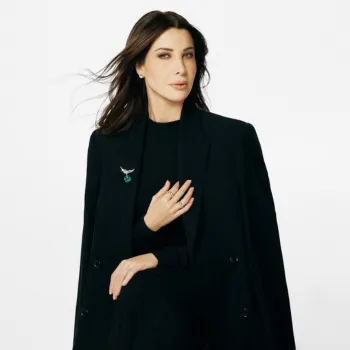
Artist Nancy Ajram
All events of Artist Nancy Ajram

100% protected tickets
If anything happens, we've got you covered.
Nancy Ajram: The Queen of Arab Pop and Her Concert Tickets on FansPass
Few female artists have managed to become a commercial and artistic brand at the same time, their names crossing generations and borders—and at the top of this list stands Nancy Ajram. The Lebanese singer known as the "Queen of Arab Pop" was not merely a beautiful voice added to the music scene, but a complete artistic phenomenon that redefined the image of the pop star in the Arab world, combining tarab performance, visual presence and a mass reach with few equals.
Since her real breakthrough at the start of the millennium, Nancy Ajram drew for herself a special place with songs that became icons, music videos that created a school in Arab video direction, and a presence that crossed Lebanon's borders to reach Egypt, the Gulf and North Africa, and even a global audience that followed her through streaming platforms and social media. She has sold more than thirty million copies of her works, won World Music Awards, and broken records on YouTube and Spotify, becoming one of the most successful female artists in the history of Arabic song.
Nancy's success was no coincidence but the fruit of long perseverance that began in childhood and passed through phases of difficult foundation before her talent exploded on a wide scale. Between her modest beginnings in the late 1990s and her meteoric rise at the start of the millennium lies the story of an artist who believed in her talent and worked intelligently to build it step by step, until she became a name that needs no introduction from the Atlantic to the Gulf.
With every new appearance on stage, demand for Nancy Ajram concert tickets rises among an audience spanning generations. This guide presents her full biography, her most important milestones, her singing style and her most famous works, with a brief note on how to book her tickets through FansPass.
Who Is Nancy Ajram?
Nancy Nabil Ajram is a Lebanese singer born on the sixteenth of May 1983 in the village of Sohaila in the Mount Lebanon Governorate, and she grew up in the Ashrafieh district of Beirut. She began singing in her childhood and took part in the talent program "Nujoom Al-Mustaqbal" (Future Stars) at the age of twelve, where she won the gold medal in the tarab category, drawing early attention to an exceptional talent.
Nancy is known by the nickname "Queen of Arab Pop" in recognition of her ability to blend Arab pop with Eastern rhythms and turn a song into a complete audio-visual experience. Over her career she became one of the most influential and present Arab female artists, whether through her musical works or through her appearances and participations in major talent programs.
Nancy Ajram: A Style That Blended Pop and Feeling
Nancy Ajram's style rests on a clever equation between the lightness of pop and the depth of Eastern feeling. She presents the joyful danceable song that sets concerts alight, and at the same time performs the tender emotional song that touches the heart, and this diversity is what broadened her fan base to include different tastes and ages. Her works moved between the romantic, such as "Ehsas Jdeed" and "Am Bit'alla' Feek," the rhythmic, such as "Ya Tabtab" and "Ma Teegy Hena," and the patriotic, such as "Salamat" and "Beirut."
But what truly distinguished Nancy is not her voice alone, but her complete vision for building stardom. She realized early the importance of image and the music video in making the modern song, and collaborated with talented directors who drew for her a special visual identity, so that every new work of hers became an event the audience anticipated. This ability to reinvent herself with each phase is what kept her at the forefront for more than two decades.
Nancy is also credited with not confining herself to a single mold; between the Lebanese, Egyptian and Gulf song, she moved with striking flexibility and sang in different dialects through which she addressed a wide Arab audience. This openness to different schools and dialects broadened her reach and made her present in nearly every Arab country—not merely as a Lebanese artist, but as a comprehensive Arab star whom the audience of each country feels is close to them.
Milestones That Made Nancy Ajram's Name
From Sahel Alma to Ashrafieh: Childhood and Early Talent
Nancy was born in the village of Sohaila in Mount Lebanon and grew up in the Ashrafieh district of Beirut in a home that loved art. Her singing talent appeared while she was a young child, so she sang at family and school occasions. Those around her noticed that this child possessed a tarab sensibility and a striking voice beyond her years, so her journey with singing began early, supported by her family, which believed in her talent and stood behind her in her first steps.
This early family support was a decisive factor in her career; instead of the child's talent being suppressed, she found those who nurtured her and guided her toward professionalism. Nancy trained in authentic tarab from a young age, which gave her voice a solid foundation that later appeared even in her light pop songs, as she remained able to perform the difficult tarab song alongside the danceable one—an advantage that set her apart from many pop stars of her generation.
"Future Stars": A First Gold Medal
Her participation in the "Future Stars" program at the age of twelve was an important launching point, as she won the gold medal in the tarab category—an early achievement that revealed her ability to perform the difficult tarab song despite her young age. This win gave Nancy confidence and a presence that paved her first steps toward professionalism.
"Mehtajalak" and "Sheel Ayounak Anni": The Foundation Phase
Nancy released her first album "Mehtajalak" in 1998 at the age of fifteen, then followed it with the album "Sheel Ayounak Anni" in 2001. This phase did not achieve the wide mass reach that came later, but it was a necessary foundation phase that refined her artistic tools, introduced the audience to her voice, and built a base from which she launched toward stardom.
These beginnings reveal an important side of Nancy's artistic personality; she did not reach the top all at once, but passed through years of work and patience before her experience matured. During this phase, she gained expertise in dealing with the studio, the stage and the media, and learned from the early challenges lessons that sharpened her awareness of the art industry. That is why, when the moment of her big breakthrough came, Nancy was fully ready to seize it, because she had built her foundation steadily rather than betting on a quick success that soon fades.
"Ya Salam" and "Akhasmak Ah": The Real Breakthrough
The major turning point came in 2003 with the album "Ya Salam" and the song "Akhasmak Ah," which spread enormously across the Arab world. This success coincided with her collaboration with producer Jiji Lamara, who took over managing her work and drew the features of her new phase, and the Lebanese director Nadine Labaki, who created for her a bold, modern visual identity through a series of striking music videos. This combination of voice, image and smart artistic management moved Nancy from a promising singer to a first-class Arab star.
This phase had an impact beyond the success of a single song; Nancy and her team redefined the shape of the Arab pop star and proved that success no longer relied on the voice alone but on a complete system that included song selection, the video, the look and the marketing. From that moment, every new release by Nancy became an artistic and media event followed by millions, and her name became synonymous with sweeping mass success on the Arab music scene.
"Ah W Noss": Crowning the Queen of Arab Pop Title
The album "Ah W Noss" in 2004 reinforced Nancy's standing and cemented her title as Queen of Arab Pop. Its famous song carried the same name and achieved overwhelming success, followed by works that established her presence, from "Ya Tabtab W Dallaa" in 2006 to "Betfakkar Fi Eih" in 2008. Her songs began to top the most-listened charts, her videos became the talk of the audience, and her concerts became among the most in-demand in the region.
Children's Albums: "Shakhbat Shakhabit" and "Super Nancy"
Among the aspects that distinguished Nancy Ajram's career was her entry into the world of children's songs. She presented the album "Shakhbat Shakhabit" in 2007, which achieved exceptional success and whose song became one of the most famous children's songs in the Arab world, then followed it with the album "Super Nancy" in 2012. These works gave her a new audience of children and families and added to her image a beloved dimension beyond the bounds of pop songs.
This step was bold and clever at once; while most pop stars focus on the youth audience, Nancy chose to address children with works designed specifically for them, thereby entering Arab family homes through another door. What is more beautiful is that the children who grew up on "Shakhbat Shakhabit" are today young adults who follow her recent works, meaning these albums were not merely a passing addition but a long-term investment in a fan base that extends across generations.
The "Nancy" Series and Digital Presence
Nancy continued her releases within a series bearing her name, from "Nancy 7" in 2010 to "Nancy 8" in 2014, "Nancy 9 – Hassa Beek" in 2017 and "Nancy 10" in 2021. This prolific output was accompanied by a strong digital presence; she became the first Arab female artist whose song "Ya Banat" crossed the 100 million views mark on YouTube, and was chosen as the most-streamed Arab female artist on Spotify in 2020, reflecting her ability to keep pace with the digital age and maintain her lead.
"Sah Sah" with Marshmello: Crossing Toward the Global
In 2022, Nancy took a striking step toward the global with her collaboration with the international star Marshmello on the song "Sah Sah," which became the first Arabic song to enter the Billboard electronic/dance chart. This collaboration confirmed Nancy's ability to build bridges between Arabic song and global music and reinforced her presence with a new audience outside the Arab region.
This collaboration came as the fruit of a long path of openness to the global; Nancy did not wait for the global audience to come to her but went to it through a well-considered collaboration with one of the world's most famous electronic music producers, presenting a song that combined the Arabic lyric with the global beat in a way respectful of her identity. This success opened the door to a renewed conversation about the Arabic song's ability to compete globally when presented with a modern vision, and confirmed that Nancy is not merely a regional star but an artist with ambition that transcends the region's borders.
Nancy on Screen: Arab Idol and The Voice Kids
Nancy's presence was not limited to singing but extended to the screen as a beloved face in talent programs. She took part as a jury member on "Arab Idol" between 2013 and 2017, and was a coach on "The Voice Kids" in 2016, where she contributed to discovering young singing talents. This television presence brought her closer to the audience and added a beloved human dimension to her popularity.
Through these programs, another side of Nancy's personality appeared; she seemed closer to viewers with her spontaneity and warm dealings with the contestants, especially the children on "The Voice Kids." This recurring appearance on Arab screens reinforced her weekly presence in the homes of millions and made her a familiar name even to those who do not closely follow her musical works, which contributed to broadening her fan base and cementing her image as a comprehensive star who combines singing with media presence.
Personal Life: Fadi El Hachem and the Daughters
On a personal level, Nancy Ajram married the dentist Fadi El Hachem in 2008 and was blessed with three daughters: Mila, Ella and Lya. Nancy is known for her love of her family and her keenness to share moments of her family life with her audience through social media, which made her image combine the great art star and the mother close to her followers.
This balance between stardom and family life added a beloved dimension to Nancy's image; to her audience she is not merely an artist on stage but a close figure whose followers keep up with the details of her life and joys. This closeness reflected on her relationship with her audience, so she enjoys wide engagement on social platforms where she has one of the largest follower bases among Arab artists, which gives every new work of hers immediate momentum the moment it is released.
A Renewed Presence Across Generations
It is rare for a female artist to maintain her popularity for more than two decades without declining, but Nancy Ajram succeeded in this because she never stopped renewing herself. The generation that grew up on the songs "Akhasmak Ah" and "Ah W Noss" still follows her, while a new generation came to know her through her recent works, her global tours and her heavy presence on digital platforms. This extension across generations is what explains the continued great demand for her concerts every time a new date is announced.
Nancy Ajram and Her Music Videos: A School in the Musical Image
The phenomenon of Nancy Ajram cannot be understood in isolation from her revolution in the world of the Arab music video. When she launched at the start of the millennium, Arabic song was in a phase of transformation, and Nancy and her team realized early that the image had become an integral part of a song's success. From here came her collaboration with the Lebanese director Nadine Labaki, who created for her a series of videos that did not settle for showing the singer singing but built complete visual stories with plots, characters and cinematic atmospheres.
These videos presented a new image of the Arab pop star; bold, feminine and modern at once, from "Akhasmak Ah" to "Ya Salam," "Ah W Noss" and "Lawlaki." Some of these works sparked wide discussion at the time, but in the end they cemented Nancy's name and turned each new release into an event the audience anticipated. Most importantly, this visual approach was not merely a passing dazzle but founded a school in Arab video-making that many artists after her were influenced by, making Nancy a reference in combining song and image.
Nancy Ajram, Advertising and Commercial Presence
Nancy Ajram's presence went beyond the bounds of the song to the world of advertising and brands, as she became one of the most in-demand Arab faces in major promotional campaigns. Her name was associated with a number of global and regional brands, and she was among the first Arab female artists to become "ambassadors" for huge commercial brands, which reinforced her image as a star whose fame transcends art into stardom in its comprehensive sense.
This commercial presence was not separate from her artistic career but part of her complete vision for building her name as a brand. An artist who sings, appears in advertisements, tops magazine covers and participates in talent programs, becoming present in the audience's awareness on more than one level. This ability to manage her image intelligently is one of the secrets of her staying at the forefront for many years and her turning into a model studied in the making of Arab stardom.
Nancy Ajram on Stage and Her Presence at Concerts
If the songs and videos are what made Nancy's fame, then her live concerts are what cemented her direct relationship with her audience. Nancy is known for her striking stage presence and her ability to interact with the audience and build a complete festive atmosphere, as she combines in a single evening her danceable songs that ignite the crowd and her emotional songs that create quiet, moving moments. This diversity makes her concerts a complete experience suited to different tastes and ages.
Throughout her career, Nancy performed concerts in major Arab capitals and cities, and festivals in Egypt, Lebanon and the Gulf states, in addition to global tours targeting Arab communities in Europe, America and Australia. She continued her strong presence in recent artistic seasons, including performing major concerts and participating in huge events, confirming that she remains one of the most in-demand artists on stages. With every announcement of a new date, demand for her concert tickets rises quickly given her wide popularity.
Nancy Ajram Between the Global and the Digital Reach
Among the most prominent things that distinguish Nancy Ajram's career is her ability to keep pace with the transformations of the music industry, from the era of printed albums to the era of digital streaming. While many artists of her generation declined with the change in listening tools, Nancy maintained her presence and even reinforced it, achieving record numbers on YouTube and Spotify, becoming the first Arab female artist to cross the 100 million views mark on YouTube with the song "Ya Banat," and being chosen as the most-streamed Arab female artist on Spotify in 2020.
She crowned this global reach with her collaboration with the star Marshmello on the song "Sah Sah" in 2022, which entered the Billboard electronic/dance chart as the first Arabic song to achieve this. This crossing toward the global was not merely a coincidence but the result of an early awareness of the importance of opening up to global markets and collaborating with international names, making Nancy a bridge between Arabic song and global music, and an ambassador for Arab pop in international arenas.
Nancy Ajram's Influence on Arabic Song
Nancy Ajram's role goes beyond being a successful singer to being one of the female artists who reshaped the features of stardom-making in the Arab world. She presented a complete model of the pop star who does not settle for the beauty of the voice but manages her image, videos and media presence with awareness and professionalism—a model that influenced a whole generation of female artists who came after her.
Her entry into the world of children's songs also gave her a special human dimension and made her present in Arab family homes across successive generations. Her impact remains present on the contemporary scene, whether through the female artists influenced by her style or through her classic works that are still sung and re-performed today. Between her huge record of songs and videos, her global awards, her record numbers and her renewed presence, Nancy Ajram remains one of the most important names in the history of modern Arabic song.
Nancy Ajram's Albums
Throughout her career, Nancy Ajram presented a series of albums that kept pace with her artistic development, the most prominent of which are:
- Mehtajalak (1998): Her first album at the start of her journey.
- Sheel Ayounak Anni (2001): From the early foundation phase.
- Ya Salam (2003): The real breakthrough album with the song "Akhasmak Ah."
- Ah W Noss (2004): The album that cemented her title as Queen of Arab Pop.
- Ya Tabtab W Dallaa (2006): With it she continued her string of successes.
- Shakhbat Shakhabit (2007): A children's album that achieved exceptional success.
- Betfakkar Fi Eih (2008): One of her most prominent works of that phase.
- Nancy 7 (2010): Within a series bearing her name.
- Super Nancy (2012): A second children's album.
- Nancy 8 (2014): With it she continued her renewed presence.
- Nancy 9 – Hassa Beek (2017): One of her successful recent works.
- Nancy 10 (2021): Her latest album within the series.
Nancy Ajram's Most Famous Songs
Nancy has accumulated a huge record of songs that became part of Arab memory, spread between her classics and her more recent works:
Her Classics That Never Miss Her Concerts
- "Akhasmak Ah"
- "Ya Salam"
- "Ah W Noss"
- "Ya Tabtab W Dallaa"
- "Ehsas Jdeed"
- "Am Bit'alla' Feek"
- "Ma Teegy Hena"
- "Betfakkar Fi Eih"
- "Salamat"
- "Shakhbat Shakhabit"
- "Ya Banat"
Her More Recent Works
- "Badna Nwalli' El Jaw" (2018)
- "Albi Ya Albi" (2020)
- "Emmi" (2021)
- "Sah Sah" (with Marshmello, 2022)
The final setlist for each concert remains the artist's and her team's choice and may change according to the city, occasion and concert length.
Nancy Ajram's Awards and Achievements
Throughout her career, Nancy Ajram has garnered many awards and achievements that crowned her success, the most prominent of which is her winning three World Music Awards as the best-selling Arab female artist, and her selling more than thirty million copies of her works up to 2007. She also became the first Arab female artist to cross the 100 million views mark on YouTube with the song "Ya Banat," and was chosen as the most-streamed Arab female artist on Spotify in 2020. These numbers and awards reflect her exceptional standing as one of the most successful female artists in the history of Arabic song.
What is striking is that these achievements did not stop at a particular era but extended from the peak of the printed-album era to the digital streaming era, confirming her rare ability to adapt to the industry's transformations. The artist who garnered sales awards in the mid-2000s is the same one who topped the digital streaming charts years later, and entered the global Billboard charts in a later phase. This continuity of achievement over more than two decades makes Nancy's career an exceptional case rarely repeated on the Arab artistic scene.
Booking Nancy Ajram Concert Tickets
Nancy Ajram concert ticket prices vary by city, venue and ticket category, and multiple tiers are usually available to suit different budgets. You can book and buy your tickets securely through the "FansPass" platform as soon as her concert dates are officially announced, choosing the city, category and seat location.
Frequently Asked Questions About Nancy Ajram
Who is Nancy Ajram?
A Lebanese singer born in 1983, nicknamed the "Queen of Arab Pop," and considered one of the most successful, best-selling and most widespread Arab female artists.
Why is Nancy Ajram nicknamed the "Queen of Arab Pop"?
Because of her ability to blend Arab pop with Eastern rhythms and turn her songs into complete audio-visual experiences that created a school in the Arab music video.
What are Nancy Ajram's most famous songs?
Among the most prominent are "Akhasmak Ah," "Ya Salam," "Ah W Noss," "Ya Tabtab W Dallaa," "Ehsas Jdeed," "Betfakkar Fi Eih" and "Sah Sah" with Marshmello.
How many albums does Nancy Ajram have?
She presented around twelve albums, including two albums dedicated to children: "Shakhbat Shakhabit" and "Super Nancy."
What are her most notable global achievements?
She won three World Music Awards as the best-selling Arab female artist, was the first Arab to cross 100 million views on YouTube with the song "Ya Banat," and the first to enter the Billboard dance chart with the song "Sah Sah."
Did Nancy take part in talent programs?
Yes, she was a jury member on "Arab Idol" and a coach on "The Voice Kids."