

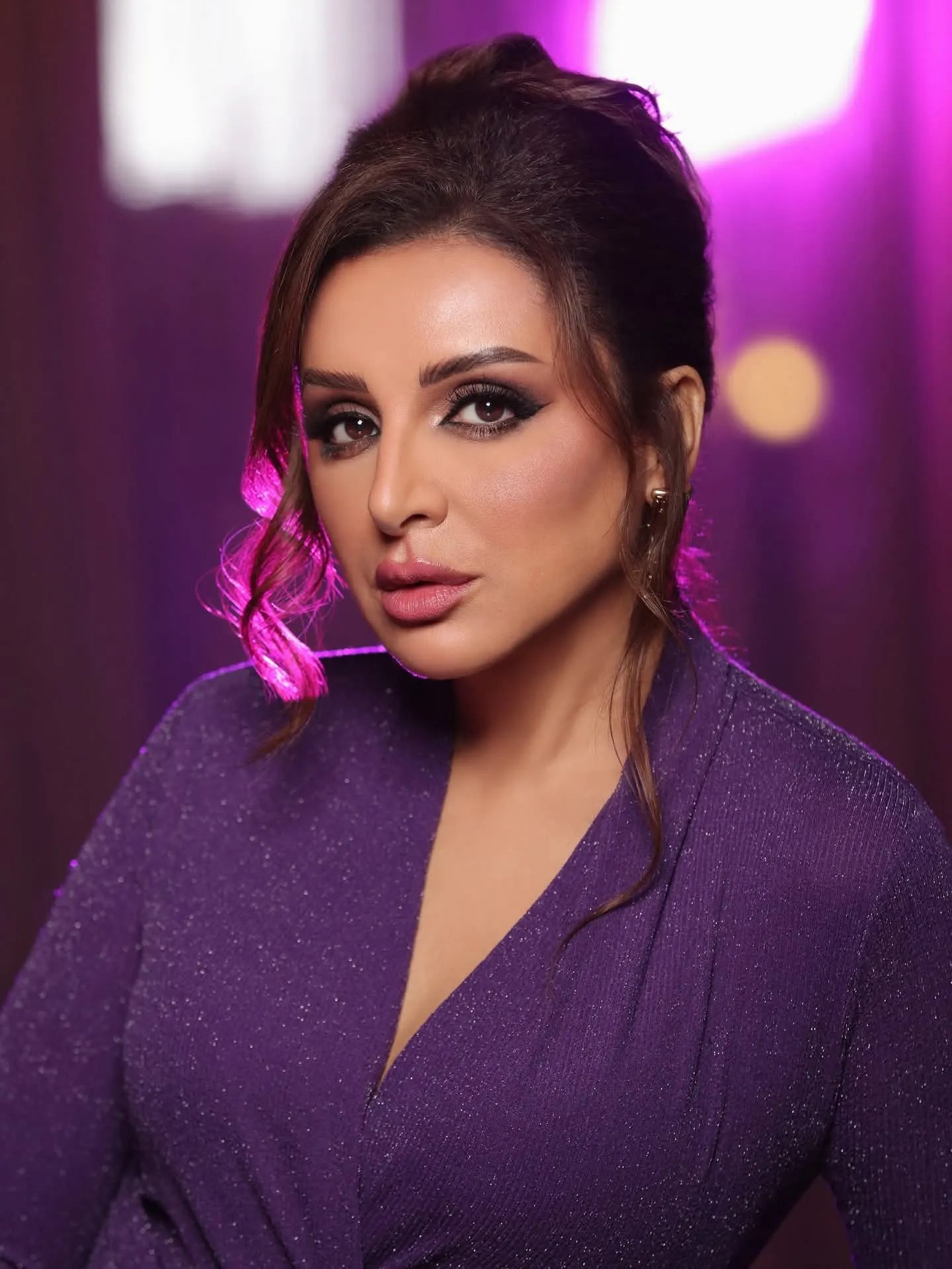
The artist Angham
All events of The artist Angham

100% protected tickets
If anything happens, we've got you covered.
Angham concerts bring classical Arabic tarab and contemporary Arabic music together in one carefully paced live experience. Fans arrive with decades of songs in their memories, from “Fi El Rokn El Baeed El Hady” and “Sidi Wesalak” to “Omry Maak” and “Howa Enta Meen,” then hear those familiar words and melodies take on a new life through improvisation, the orchestra and the audience singing along.
Angham Mohamed Ali Soliman is an Egyptian singer born on 19 January 1972 in Alexandria. She grew up in a musical family: her father, composer Mohamed Ali Soliman, played the central role in training and introducing her, while the late singer Emad Abdel Halim was her uncle. She began performing at a young age, learning classical songs and traditional Arabic forms before gradually building an identity of her own.
During the mid-1990s, Angham widened her circle of collaborators to include poets, composers and arrangers from different generations. She preserved the strength of her classical foundation but placed her voice inside songs closer to everyday speech and the details of modern relationships. That shift shaped the artist audiences know today: sensitive in her choice of lyrics, precise in phrasing and emotionally expressive without unnecessary exaggeration.
Angham has released 29 documented albums, including eight full Khaleeji-dialect projects. Across several decades, she has built a catalogue that combines Egyptian and Gulf music, emotional ballads, orchestral tarab and contemporary rhythms. Her concerts therefore offer more than nostalgia: they move through several creative eras and give different generations a part of the set they can call their own.
FansPass lets you follow available Angham concerts in Riyadh, Jeddah, Dubai, Kuwait, Bahrain, Doha, Cairo and other cities, while comparing ticket categories, prices, seat locations and delivery methods. Cities, venues and entry conditions vary from one show to another, so the selected event page should always be your final reference before booking.
Angham: Early Life and Personal Background
Angham was born in Alexandria, a city that retained an emotional place in her story, but much of her childhood revolved around vocal training, rehearsals and studios. Her father selected material and supervised her performances, and her name became known at an unusually young age. That proximity to the music business gave her valuable experience, yet it also made independence more complicated: she was not starting from nothing, but redefining an established name.
Her songs frequently explore relationships, choice, separation, dignity and waiting, encouraging listeners to connect the material with her human experiences. Publicly documented information notes several marriages and that she is the mother of two sons, Omar and Abdelrahman. Her first marriage was to sound engineer Magdy Aref; she later married Kuwaiti arranger Fahd Mohammed Al Shalabi. A marriage to actor Ahmed Ezz was subsequently disclosed, and her later marriage to arranger Ahmed Ibrahim ended in 2020.
Her private life has attracted considerable media attention, but work has repeatedly remained her most stable space. That experience may help explain the authority with which she performs songs of confrontation and confession. The woman in an Angham song is not always presented as powerless; she can ask questions, walk away and establish boundaries.
Angham has also faced health challenges that required treatment and time away before returning to the stage. The public response showed that her bond with listeners extended beyond any single hit. The essential point for a performer page is not private medical detail, but the resilience behind her return and continued ability to command a concert hall.
What Makes Angham’s Voice Distinctive?
Angham’s strength is not simply vocal volume; it is control. She can begin a line in a low register close to speech, then expand it gradually without losing the meaning of the lyric. Pauses and breath become part of the interpretation, making a phrase sound like a thought discovered in the moment rather than a memorised text.
Her diction is equally important. Even in complex melodic passages, the words remain clear. This matters because her repertoire depends on psychological detail: reproach, doubt, resistance, longing or a decision to leave. If the listener misses the words, half the dramatic effect disappears.
Her tarab training allows her to extend phrases and improvise, while her experience in pop keeps the concert varied. She can move from a long orchestral performance to a lighter rhythmic number, then return to an intimate ballad that the entire audience sings with her.
What to Expect at an Angham Concert
An Angham concert normally centres on live vocals, a large ensemble and a programme that builds in stages. Some nights begin with quieter songs, rise toward the best-known hits, then open into a tarab or Khaleeji section. The sequence depends on the city, ensemble, occasion and total running time.
- Romantic songs: selections such as “Omry Maak,” “Yaretak Fahemni” and “Howa Enta Meen.”
- Tarab performances: songs that leave room for improvisation, extended phrases and exchanges with the orchestra.
- Khaleeji songs: an important part of her Saudi, Kuwaiti and Bahraini concerts.
- Early catalogue: choices that revisit “Fi El Rokn El Baeed El Hady” and “Ella Ana.”
- Teegy Neseeb songs: recent favourites that have become important concert material.
- New releases: the programme may include the newest songs available at the time of the show.
At a shared concert, Angham may appear alongside an artist such as Majid Al Mohandis, Assala or another major name. Check the event description because her stage time and order of appearance may differ from a solo concert.
Angham Albums in Detail
Angham has one of the most extensive album careers among Arab singers of her generation. Her discography charts a journey from family-led classical training to artistic independence, and later from the cassette and television era to self-production and streaming platforms.
The Early Years and Fi El Rokn El Baeed El Hady
Early projects such as Ana El Mawkaa Esmi Adnah and Maa El Taqdeer preceded the album widely regarded as her defining starting point, Fi El Rokn El Baeed El Hady. Billboard Arabia dates it to 1987, while some platforms list 1988. Salah Fayez wrote the title song and Mohamed Ali Soliman composed it, placing her youthful voice inside a clearly traditional Arabic framework.
Awal Gawab followed in 1988, then several 1989 releases including Lali Le Lali, Angham 1989 and Layek. The intensity of that release schedule helped establish her name quickly and reflected her father’s strong influence over composition and selection.
Etfakna, Bebasata Keda and Enta El Aalam
Angham entered the 1990s with Etfakna in 1990, followed by Bebasata Keda in 1991 and Enta El Aalam in 1992. Her vocal command kept developing, while her artistic identity searched for a balance between inherited tarab and emotional language suited to younger listeners.
Some early albums were reissued digitally years later, which explains why streaming services may display dates different from the original release. A discography should distinguish between the historic album date and a later digital edition.
Ella Ana and the Move Toward Independence
Ella Ana, released in 1993, was a central milestone. Its title track, written by Khairy Fouad and composed and arranged by Mohamed Ali Soliman, demonstrated Angham’s ability to carry a complete emotional position through vocal performance. Enta Mahboubi and Shay Daa followed in 1994.
This period prepared the way for artistic independence. Angham recognised that longevity required a wider group of collaborators and an approach that could respond to the changing Arab music industry, especially the rise of music videos and pop during the mid-1990s.
Baollak Eih and Akdar
Baollak Eih revealed a more modern Angham in 1995, while Akdar confirmed the wider range of her choices in 1996. She did not abandon Eastern performance, but placed her voice within lighter arrangements and more conversational lyrics, helping her reach a younger audience.
Artistic independence now became practical rather than symbolic. Working with multiple writers and composers gave each project different colours, while Angham assumed greater responsibility for choosing material that represented her.
Betheb Meen and Khally Bokra Le Bokra
Betheb Meen arrived in 1997, followed by Khally Bokra Le Bokra in 1998. The titles themselves reflect a move toward questions, dialogue and everyday expression. Latin pop touches and Arab interpretations of Western arrangements entered her sound without erasing its Eastern melodic identity.
This period was a bridge toward the style that defined her modern image. The singer no longer described love from outside; she entered the contradictions and small details of the relationship as the person living it.
Wahdaniya — The Birth of Modern Angham
Many critics regard Wahdaniya, released in 1999, as the radical turning point. She collaborated with names from her generation including Bahaa El Din Mohamed, Riyad El Hamshari and Ziad El Tawil, while lyricist Essam Abdallah helped frame relationships in a more complex and daring way.
The songs were no longer simply about love or separation. They examined jealousy, choice, comparison and dignity. That approach became an Angham signature, visible later in songs such as “Aarafha Beya,” “Ahy Gat” and, many years afterward, “Khalik Maaha.”
Leih Sebtaha and Sidi Wesalak
Leih Sebtaha, released in 2001, remains one of her most important and enduring albums. It included “Sidi Wesalak,” a major audience favourite that combines rhythm, Eastern melody and lyrics easy for a full concert hall to repeat.
The album marked another shift in her image and position across the Arab market, confirming the creative school that began with Wahdaniya. Its continuing presence in discussions of her work shows that its success extended far beyond its original release period.
Omry Maak
Omry Maak presented Angham in one of her most mature romantic phases in 2003. The title song became a concert landmark because it allows her to move from restraint toward emotional fullness while giving the audience ample space to sing.
During these years she worked with lyricists including Nader Abdallah, whose collaboration extended across several albums. Such long creative relationships helped establish a language written with her voice in mind rather than forcing each project to begin again from zero.
Bahebak Wahashtiny and Kol Ma Nearab
Bahebak Wahashtiny combined confession and longing in 2005 and included memorable songs such as its title track and “Baheb Nafsi.” Kol Ma Nearab followed in 2007, maintaining the balance between pop accessibility and tarab performance while music videos helped songs travel across the region.
By this stage Angham was a leading live performer, and the album could no longer be separated from the stage. Songs worked in private listening, then acquired another dimension when performed with an orchestra and a responsive audience.
Nefsy Ahebak and Mahadesh Yehasebni
Nefsy Ahebak continued her exploration of desire and fear in 2009. Mahadesh Yehasebni followed in 2010 with a title that openly rejected social judgment. Women in her songs became more willing to defend their choices even when admitting hesitation or mistakes.
Singles and televised concerts were becoming increasingly important, yet Angham preserved the album as a project with a dramatic line rather than a random collection of tracks.
Ahlam Barea’a
After a five-year interval between major Egyptian albums, Ahlam Barea’a arrived in 2015 and confirmed her maturity and competitiveness. It belonged to an era increasingly shaped by digital platforms but maintained careful attention to poetry, arrangement and vocal detail.
The record showed that Angham did not need to chase every trend. She could use modern production tools while staying within her own territory: complicated relationships, melodies that give the voice room and performances that make the story feel immediate.
Khaleeji Albums and Rah Tethkerni
Angham was among the first major Egyptian female stars to record complete albums in a Gulf dialect. Billboard Arabia documents eight Khaleeji albums in her career. She did not treat the dialect as decoration or a seasonal experiment; she studied its vocabulary and worked with leading Gulf poets and composers.
Rah Tethkerni was an important 2018 milestone and included “Wain Terooh” and “La Tehji.” It deepened her relationship with audiences in Saudi Arabia, Kuwait and Bahrain and made the Khaleeji portion of her concerts an expected part of the night.
Hala Khasa Gedan
Hala Khasa Gedan placed Angham at the centre of the Egyptian and Arab music scene again in 2019. One of its biggest tracks was “Yaretak Fahemni,” written by Nader Abdallah and composed by Tamer Ashour. Its accessible melody and restrained reproach quickly made it one of her most requested songs.
The title, meaning “a very special case,” also describes her position. She belongs neither entirely to the old tarab generation nor to lightweight pop, but to a space where a trained voice can deliver a thoroughly contemporary song.
Mazh
Angham released the Khaleeji album Mazh in 2020, when live concerts around the world faced major disruption. It maintained her commitment to Gulf music and supplied new material at a time when promotion and listening habits were changing rapidly.
The album also confirmed that Khaleeji music is not a side chapter beside her Egyptian work. It is a parallel path with its own poets, composers, listeners and live performances.
Teegy Neseeb — A Major Return
Angham produced and released Teegy Neseeb on 28 July 2024. Its 12 songs run for approximately 48 minutes, with contributors including Amir Teima, Nader Abdallah, Ehab Abdel Wahed, Hassan El Shafei, Tamer Ashour, Tarek Madkour and Nader Hamdy.
The album delivered a series of widely circulated songs including “Howa Enta Meen,” “Teegy Neseeb” and “Khalik Maaha.” Tracks entered Billboard Arabia charts, demonstrating that a full-length Arab album can still become an event when it possesses a coherent identity.
Its stories focus on relationships that have reached a moment of decision: confrontation, doubt, withdrawal or reconsideration. Listeners therefore found themselves in several songs rather than attaching the project to only one single.
Angham Awards and Major Honours
Angham’s position is reflected not only in albums and sold-out appearances but also in regional awards recognising her longevity and artistic value. In 2019, the Murex d’Or named her Best Arab Female Singer following a period that included the success of Hala Khasa Gedan.
The Beirut International Awards Festival, BIAF, also honoured her career at its ninth edition in 2018. A career recognition differs from an award for one song or album: it considers the early years, artistic transformation, Egyptian and Gulf projects, and the ability to remain a leading artist across generations.
Angham also received the Favourite Female Artist award in the music category at the Joy Awards in Riyadh after a public vote. The honour reflects her broad regional popularity and connects her Egyptian identity with her particularly strong following in Saudi Arabia and the Gulf.
Beyond formal trophies, continuing demand for her concerts and the renewed discovery of older albums on streaming platforms represent another kind of public recognition. Awards document individual moments; a song remaining in the live set decades later reveals the lasting impact of the work.
Angham’s Recent Releases
After Teegy Neseeb, Angham continued releasing singles and live recordings. Songs from this phase include “Sebtely Alby,” “Ekhtalafna, Fara’na, Eftara’na,” “Aaneq El Shams,” “El Hob Hala,” “Mesh Habiby Bas” and “Mesh Adra.” These releases show that the album’s success opened a new creative phase rather than closing one.
Angham’s Most Famous Songs
- Fi El Rokn El Baeed El Hady.
- Awal Gawab.
- Lali Le Lali.
- Etfakna.
- Bebasata Keda.
- Enta El Aalam.
- Ella Ana.
- Baollak Eih.
- Akdar.
- Betamel Eih Feya.
- Khally Bokra Le Bokra.
- Sidi Wesalak.
- Wahdaniya.
- Leih Sebtaha.
- Omry Maak.
- Bahebak Wahashtiny.
- Kol Ma Nearab.
- Da Elly Andy.
- Nefsy Ahebak.
- Mahadesh Yehasebni.
- Ma Bethazarsh.
- Aktablak Taahod.
- Etgah Wahed.
- Bein El Beinin.
- Hetta Naqsa.
- Yaretak Fahemni.
- Hala Khasa Gedan.
- Asameek El Ketira.
- Hodna.
- Lawha Baheta.
- Wain Terooh.
- Rah Tethkerni.
- Mazh.
- Howa Enta Meen.
- Teegy Neseeb.
- Khalik Maaha.
- Kan Barea.
- Mowafaka.
- Howa Nafs El Shouq.
- Sebtely Alby.
- El Hob Hala.
- Mesh Habiby Bas.
This is a guide to her catalogue, not a guaranteed setlist. Angham chooses songs according to the city, occasion and length of the concert, and may dedicate more time to Khaleeji material when performing in Saudi Arabia or Kuwait.
Angham Concerts in the Gulf
Angham has built a long relationship with Gulf audiences through her Khaleeji albums and regular appearances during entertainment seasons and major occasions. She has performed in Riyadh, Jeddah, Kuwait, Bahrain, Dubai and Doha in orchestral nights, shared concerts and national celebrations.
The format changes by venue. Coca-Cola Arena uses mapped stands and seating sections, while some concerts in Kuwait or Riyadh may offer tables, floor sections or hospitality packages. Compare what each category includes rather than judging by price alone.
How to Follow Angham Concert Dates
There is no fixed calendar that remains accurate throughout the year. Concerts are announced in stages, and entry times or participating artists may change. When an event appears on FansPass, check:
- City and country.
- Venue name and seating map.
- Confirmed date and local time.
- Door-opening and show-start times.
- Whether it is a solo or shared concert.
- Age policy and rules for children.
- Photography, bag and late-entry rules.
If you are travelling, choose flexible bookings and leave enough time before and after the concert, especially for major nights with busy car parks and entrance gates.
Angham Ticket Prices
Prices vary by city, venue, category and demand. An intimate theatre show is not priced like a shared arena concert, and an upper side seat does not offer the same experience as a nearby table or VIP category.
Useful planning estimates include:
- Economy and upper-tier seats: approximately SAR 200–400 or the local equivalent.
- Mid-range categories: approximately SAR 400–800.
- Close or premium seats: approximately SAR 800–1,500.
- VIP and hospitality: approximately SAR 1,500–3,000 or more.
- Private tables: sometimes sold as a complete unit and may cost considerably more.
These are planning ranges, not fixed prices. Some shows may start lower, while premium hospitality can exceed the figures above. Compare the final price with the seat location and included benefits before buying.
How to Buy Angham Tickets on FansPass
- Open the Angham page: review available concerts.
- Choose the event: confirm the city, date and venue.
- Review the performers: check whether the night is shared.
- Select a category: compare section, row and benefits.
- Choose quantity: confirm adjacent seating for your group.
- Read the age policy: check children’s entry conditions.
- Add a discount code: use it if valid.
- Enter your details: type your name and email accurately.
- Review delivery: confirm the ticket format and expected delivery time.
- Check the total: review price and fees.
- Complete payment: retain your order number and monitor your email.
Never publish your admission code because another copy could be scanned before you reach the gate.
How to Secure the Lowest Price for Angham Tickets
If you find an identical offer at a lower final price, contact FansPass support under the lowest-price guarantee terms and prepare the email used, full name, telephone number, order number, available competitor link, evidence of the price after fees, concert details, quantity, category, row, section, benefits and delivery method.
The comparison must involve equivalent tickets. Do not compare an upper seat with a row near the stage, or a pre-fee price with a final checkout total.
Why Buy Angham Tickets from FansPass?
- Buyer guarantee: order protection under platform terms.
- Easy comparison: categories and prices in one place.
- Cost transparency: the total can be reviewed before payment.
- Multi-city coverage: follow Angham concerts in different markets.
- Resale access: additional listings and the ability to sell where permitted.
- Customer support: assistance with ordering and delivery.
How to Sell Angham Tickets If You Cannot Attend
- Sign in to your account.
- Open your profile and select the selling option.
- Choose the correct Angham concert.
- Add the category, row, seat and quantity.
- Upload proof of ownership.
- Explain adjacency and included benefits.
- Set the price and delivery method.
- Review and publish the listing.
- Complete delivery within the required period after a sale.
First verify that the event terms allow transfer or resale, especially for named tickets and hospitality packages.
Tips Before Attending an Angham Concert
- Arrive early to clear security and locate your seat comfortably.
- Distinguish door-opening time from Angham’s stage time.
- Charge your phone and keep the ticket ready.
- Check the age and children’s policy.
- Read photography and bag restrictions.
- Choose a side seat if seeing the full orchestra is the priority.
- Choose a closer section if facial expression and artist interaction matter more.
- Plan parking or public transport before the event.
Frequently Asked Questions
Where can I buy Angham tickets?
You can follow available events and buy Angham concert tickets through FansPass while comparing categories and prices.
How much do Angham tickets cost?
Some categories may begin around SAR 200–400, while premium and VIP seats can reach SAR 1,500–3,000 or more depending on the event.
Does Angham perform in Saudi Arabia?
Yes. Angham performs in Riyadh and Jeddah during different seasons and occasions. Consult current event listings for confirmed details.
Does Angham sing in a Khaleeji dialect?
Yes. She has released several complete Khaleeji albums, including Rah Tethkerni and Mazh.
What is Angham’s latest major album?
Her latest major Egyptian album is Teegy Neseeb, released in 2024 with 12 tracks.
What are Angham’s recent songs?
Recent releases include “Sebtely Alby,” “El Hob Hala,” “Mesh Habiby Bas” and “Mesh Adra,” alongside new singles and live recordings on her official platforms.
What are Angham’s most famous songs?
Popular songs include “Sidi Wesalak,” “Omry Maak,” “Yaretak Fahemni,” “Howa Enta Meen” and “Teegy Neseeb.”
Are Angham concerts suitable for children?
The policy varies. Some shows are family-friendly, while others apply a minimum age.
Can I select a specific seat?
It depends on the event. You may select a mapped seat or purchase by category or table.
Is the setlist announced?
Not always. It may change according to the city, concert length and audience interaction.
Does Angham perform shared concerts?
Yes. She sometimes appears in nights featuring other artists, including Majid Al Mohandis.
When did Angham begin singing?
She began her career in the mid-1980s under the supervision of her father, composer Mohamed Ali Soliman.
How many albums has Angham released?
Billboard Arabia documents 29 albums, including eight in a Khaleeji dialect.
Can I receive a refund?
Refunds depend on the event and organiser’s terms. Read the cancellation, postponement and refund policy before purchase.
Can I sell my ticket if I cannot attend?
It may be listed through FansPass when the ticket conditions permit transfer and resale.