

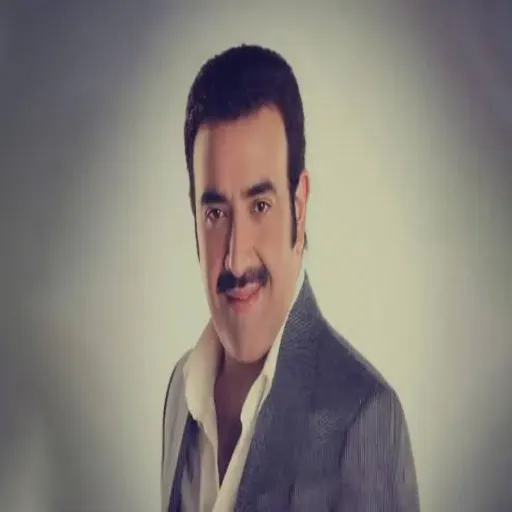
Artist Nour Mhanna
All events of Artist Nour Mhanna
No events found
Artist Nour Mhanna does not have any events scheduled at the moment.

100% protected tickets
If anything happens, we've got you covered.
Nour Mehanna Tickets — A Night of Authentic Arabic Tarab
Nour Mehanna never needed to leave musical heritage behind to establish his own name. He made the mawwal and the Aleppine qudud a foundation for a distinctive voice, recognised for sustained phrases, secure movement between maqamat and an interpretation that gives the word importance before rhythm takes over. That is why interest in Nour Mehanna tickets is connected as much with attentive listening and authentic tarab as it is with the excitement of a public concert.
Songs including “Wala Kan Aal Bal,” “Ana Einy Leik” and “Lalla Wa Asa” confirmed that he was not solely an interpreter of inherited repertoire. He developed an emotional catalogue of his own and created a musical personality that connects Aleppo’s classical discipline with the drama of the modern Arabic song.
This page offers a focused journey through Nour Mehanna’s career, signature songs, live performance style, comeback in Dubai and recent appearances in Riyadh. It also explains how to follow future concerts through FansPass. No currently available event has been confirmed in the information used for this page, so the performer listing should be checked when a new date is announced.
Ticket prices are set by sellers and appear on the individual event page inclusive of applicable fees.
Nour Mehanna and the Aleppine School of Tarab
Nour Mehanna is a Syrian singer from Aleppo, a city associated with a long tradition of qudud, muwashshahat and careful preservation of Arabic maqamat. That environment shaped his performance. He gives particular attention to the mawwal and movement between registers, allowing a phrase to reach its natural conclusion instead of shortening it for a faster format. Even on a modern stage, his presence can feel closer to a large traditional tarab gathering.
His wider Arab recognition grew when he revived “Wahashtini,” a song famously associated with Syrian singer Souad Mohamed. Rather than treating it as a copy of an established recording, he used it to introduce a wider audience to his vocal colour and interpretive range. He then strengthened his independent identity through original songs that combine classical sensitivity with a more contemporary form.
Mehanna belongs to a generation that regarded knowledge of musical heritage as a condition for creating something new. His original repertoire is therefore not separated from the mawwal or Aleppine qud; the concert presents one connected musical identity rather than a collection of unrelated selections.
Nour Mehanna’s Most Notable Songs
- Men Keter Ma Eshtaqna: one of the songs most closely associated with longing and reunion.
- Wala Kan Aal Bal: a widely recognised title central to his public catalogue.
- Ana Einy Leik: a song that reveals the romantic side of his voice and choices.
- Lalla Wa Asa: one of the original works commonly linked to his recording career.
- Wala Marra Konna Sawa: composed by Lebanese musician Melhem Barakat and built around strong emotional drama.
- Alayh El Awad: a song that helped the Wala Kan Aal Bal album reach a wider Arab audience.
The setlist changes according to the concert length, occasion and participating artists. A song’s importance in his catalogue does not guarantee that it will be performed at every appearance.
Men Keter Ma Eshtaqna: A Song of Reunion
“Men Keter Ma Eshtaqna” holds a special place in Nour Mehanna’s repertoire. It belongs to the album Jamil El Rouh, released during the 1990s, and its subject is particularly suited to the relationship between a singer who spends years away from the stage and an audience waiting for his return. Long anticipation becomes a shared song at the moment of reunion.
The work’s appeal is not based only on melody. Mehanna’s pronunciation of words of longing and his ability to extend phrases allow the track to be renewed in concert. He can begin with restraint, then give the audience space to catch the refrain and answer him, transforming a private emotional recording into a collective live scene.
That meaning became particularly clear during his Dubai comeback in April 2024. Mehanna invited Syrian actors Samer Al Masri and Qays Sheikh Najib to join him on stage for “Men Keter Ma Eshtaqna” before a gathering that included many Syrian artists. The participation summed up the occasion: a singer meeting his audience and colleagues again after years away from public concerts.
For that reason, the song remains a natural choice for events celebrating Mehanna’s return or bringing him before listeners who have not seen him for some time. The programme of each performance remains independent, however, and the song should not be considered guaranteed unless the organiser announces it.
What Distinguishes a Nour Mehanna Concert?
The experience is centred on a live voice and the interaction between singer and ensemble. A mawwal is not a decorative introduction; it is a space in which Mehanna demonstrates his command of maqam and builds musical tension before arriving at the main song. Each performance can therefore contain details that cannot be repeated in precisely the same way in a studio recording.
His Aleppine background appears in the way he extends and ornaments phrases. His original romantic songs add variety and prevent the programme from remaining entirely inside heritage. A single night may move from a classic associated with an earlier singer to one of his own songs, then to a qud or mawwal chosen in response to the atmosphere in the hall.
During Riyadh Season’s Night from the Spirit of the Golden Era, Mehanna appeared with Egyptian singer Mai Farouk and Moroccan artist Fouad Zabadi in a programme celebrating classical maqamat and Arab musical memory. This format suits his voice: artists from related tarab traditions share the stage, supported by musicians able to follow improvisation and extended interpretation.
From Aleppo to the Wider Arabic Song
Aleppo is more than a birthplace in Mehanna’s story. Its musical culture places memorisation of maqam, the ability to perform muwashshah and qud, rhythmic control and knowledge of improvisation at the centre of a singer’s education. A beautiful vocal colour is not sufficient; the performer must know when to leave the composed line and how to return to it.
Mehanna carried that background into the popular Arabic song. He retained the breadth of the tarab phrase inside works closer to the cassette and radio audience. Heritage and original music did not occupy separate compartments. His maqam training gave modern emotion additional depth and created an interpretation recognisable from its opening line.
His own songs demonstrated that his career was not built entirely on revivals. “Wala Kan Aal Bal,” “Ana Einy Leik,” “Lalla Wa Asa” and “Wala Marra Konna Sawa” each offer a different vocal space. Some depend on direct emotional confession, while others use gradual dramatic escalation. All retain a clear tarab identity.
The combination explains why Mehanna can appear in several kinds of musical occasion. He can join a tribute to Mohamed Abdel Wahab, lead a Syrian concert in Dubai or represent the Levantine school in a Riyadh evening combining Egyptian, Syrian and Moroccan traditions. He does not need to alter his identity for each event; he selects the part of his repertoire that serves its concept.
Nour Mehanna’s Return to the Stage in Dubai
The year 2024 marked an important change in Mehanna’s live presence. After a long absence from major public concerts, he returned on 13 April at Hilton Dubai Al Habtoor City. His programme combined original songs, Arabic tarab and selections associated with major figures such as Warda Al-Jazairia and Umm Kulthum, reintroducing his voice to a Syrian and wider Arab audience.
The evening gained additional meaning from the presence of Syrian stars. Samer Al Masri, Qays Sheikh Najib, Nivine Madi and others attended, while Samer and Qays joined him on stage. This gave the concert the character of an artistic and social reunion rather than simply another date in an events calendar.
The comeback did not end with one performance. A further Dubai event was announced in May, bringing Mehanna together with Syrian singer Shireen Says. It followed two appearances in the city within a relatively short period. Dubai was a fitting gateway because it brings together listeners from different Arab countries and a substantial Syrian community.
These concerts revealed something important about his current reception. Audiences were not waiting only for a new single; they wanted the return of an entire way of singing. The programmes consequently gave room to original songs, mawwal, classic repertoire, live interaction and improvisation instead of moving rapidly through short excerpts.
Nour Mehanna’s Journeys to Riyadh
Abdel Wahab Night at Riyadh Season 2024
Following his Dubai comeback, Mehanna moved to one of the region’s major concert stages. He joined Abdel Wahab Night at Riyadh Season on 25 and 26 October 2024 at Abu Bakr Salem Theater. The event brought together artists from several Arab traditions, including Majid Al Mohandis, Saber Rebai, Mohamed Tharwat and Mai Farouk, with a large orchestra conducted by Walid Fayed.
The evening celebrated the music of Mohamed Abdel Wahab, a demanding context well suited to a singer with strong maqam foundations and control of long melodic lines. Mehanna performed “Modnak” and “Fakarouni,” moving from a celebrated Abdel Wahab setting to a song deeply rooted in the memory of Umm Kulthum’s repertoire.
His Riyadh appearance differed from the Dubai comeback. Dubai focused on reunion after absence, whereas Abdel Wahab Night placed him inside a large orchestral production and a tightly defined tribute. The contrast re-established him as a performer capable both of leading his own set and contributing to a collective musical event with a precise structure.
Immortal Arts Nights at Riyadh Season 2025
Mehanna returned to Riyadh on 20 November 2025 for Immortal Arts Nights, also presented as A Night from the Spirit of the Golden Era, at Abu Bakr Salem Theater in Boulevard City. The concert brought him together with Mai Farouk and Fouad Zabadi, representing three Arab schools united by respect for classical composition and poetic song.
The organiser highlighted Mehanna’s command of classical maqamat, while the whole programme centred on music that had shaped the memories of several generations. His section represented Aleppine qudud, mawwal and the Levantine tradition beside the Egyptian school presented by Mai Farouk and the Moroccan character brought by Fouad Zabadi.
Returning to the same Riyadh stage in consecutive seasons showed that Abdel Wahab Night had not been an isolated invitation. Riyadh became a visible station in Mehanna’s renewed career: first through a tribute to a foundational composer, then through a dedicated celebration of lasting Arab tarab. Together, the appearances introduced him to listeners who may have known his recordings but had not previously heard him live.
Solo Concerts, Tribute Nights and Shared Events
A solo concert gives Mehanna the freedom to build a complete musical narrative. He can begin with his Aleppine memory, move into original recordings, then choose a classical work suited to the audience’s mood. The occasion does not confine him to a single composer or period, so the set becomes a personal portrait of his career.
A tribute night creates a different responsibility. Mehanna must interpret the featured composer’s work through his own voice while respecting its structure. His maqam education becomes especially important here, allowing him to express himself from inside the composition instead of adding vocal decoration that does not serve it.
Shared concerts change the rhythm once more. Stage time is more defined, requiring a concentrated selection that introduces his identity quickly. When artists from several regions appear together, each section becomes a musical introduction: Mehanna brings the Aleppine and Levantine colour, while another artist may represent an Egyptian, Gulf or Moroccan background.
These different formats explain his suitability for major Arab events. He does not depend on a huge visual production to establish presence. His repertoire can be rearranged for the size of the ensemble and the theme of the night, while interpretation of lyric and maqam remains the centre of the experience.
How Nour Mehanna Builds a Live Set
Mehanna’s set does not treat songs as entirely separate units. A mawwal may establish the maqam and mood before leading naturally into an original song or a classic. The ensemble can extend an introduction or repeat a phrase in response to the hall, making the live duration different from the studio version.
This form of performance requires clear leadership. The singer decides when to sustain a syllable, repeat a verse, make room for the musicians or allow the audience to answer. His work with a conductor and full orchestra during events such as Abdel Wahab Night reveals a dimension that cannot be captured completely in a short digital recording.
The material normally follows three paths: original songs expected by long-time fans, Arabic classics interpreted in his own voice, and qudud or mawwal expressing his Aleppine foundation. The strength of the programme comes from balance. Heritage alone would hide the creator of original songs, while a set limited to his recordings would reduce the improvisational space that makes him distinctive.
The audience also has an active role. “Men Keter Ma Eshtaqna” offers phrases suitable for a collective response, while a poem such as “Modnak” calls for more attentive silence. Mehanna can move between the two, giving the hall a quiet moment during a demanding line and then returning it to participation through a familiar song.
Nour Mehanna’s Albums and Recorded Catalogue
Music platforms currently present different parts of Mehanna’s catalogue, and classification or digital reissue dates may vary. Wala Kan Aal Bal and Jamil El Rouh are among the principal titles associated with him, alongside live recordings and collections combining original songs, qudud and works from the wider heritage.
Jamil El Rouh belongs to his 1990s output and includes “Men Keter Ma Eshtaqna.” Wala Kan Aal Bal became a central title in introductions to his career, and its songs helped establish an identity beyond interpretations of classics associated with other singers.
His catalogue contains romantic pieces such as “Ana Einy Leik,” “Lalla Wa Asa” and “Wala Marra Konna Sawa,” as well as concert material preserved in live recordings. Syrian cassette archives document performances including “Lamma El Habib Hakam Alayna,” “Ya Malek Albi Bel Maarouf,” “Khamret El Hob Esqiniha” and “Ebaatli Gawab.” The variety demonstrates a repertoire much wider than the small group of titles most visible on streaming platforms.
When searching for Mehanna’s music, listeners should note the different English spellings of his name and the fact that concert recordings may appear with dates or audio quality unlike the original releases. Official artist pages and licensed music services remain the best reference for release information.
Wala Marra Konna Sawa and Melhem Barakat
“Wala Marra Konna Sawa” reveals a side of Mehanna beyond the image of a qudud singer. The song was composed by Lebanese musician Melhem Barakat, whose melodies often require a voice able to travel from quiet confession to powerful emotion. Mehanna found suitable space in that dramatic construction without turning the entire song into an extended mawwal.
The collaboration placed him within the modern Levantine song, a tradition that preserved the strength of Eastern melody while addressing radio and album listeners through direct emotional language. It also showed that his Aleppine training was not a restriction holding him inside one colour, but a tool for engaging with a composer who had a strongly independent signature.
Unlike works revived from Arab musical memory, this song forms part of Mehanna’s own catalogue and of the phase in which he developed material written and composed to fit his voice. Its place in a concert reminds listeners that his career includes original collaborations as well as preservation of heritage.
Following Nour Mehanna Tickets and Concert Announcements
Nour Mehanna does not have a permanent annual touring calendar that can be published indefinitely. He may appear in a solo concert, a shared tarab night, a tribute or a major entertainment season. Buyers should therefore confirm the event title, participating artists, city and venue before purchasing.
When a new concert is listed, check whether the ticket covers the full night or a particular category, and review the running order and door time. Shared tarab evenings may last longer than standard concerts, while age and entry rules depend on the organiser and venue.
Buying Nour Mehanna Tickets Through FansPass
Choose the event, select the ticket category and quantity, then complete payment for electronic delivery. Never publish the admission code on social media, as a copied code could be used before you reach the entrance.
Reselling Nour Mehanna Tickets
If you cannot attend, you may list the ticket for sale through your account whenever its conditions permit transfer.
Lowest-Price Guarantee
If you find the identical offer at a lower final price elsewhere, contact support under the terms of the lowest-price guarantee.
Why Follow Nour Mehanna Concerts on FansPass?
- Follow available concert listings in one place.
- Compare ticket categories before choosing.
- Review the total displayed cost before payment.
- Receive order protection under buyer-guarantee terms.
- Obtain the ticket through the delivery method stated in the listing.
- Access resale when permitted by the ticket conditions.
Tips Specific to a Nour Mehanna Concert
Choose a position that balances vocal clarity with a view of the ensemble, because the musical exchange between singer and players is a central part of the experience. At a shared event, review every participating name; Mehanna’s appearance may form one section of a long tarab programme rather than a solo concert.
Arriving before the announced start is particularly valuable because the opening mawwal or instrumental introduction may be essential to the first performance. If qudud and mawwal are your priority, look for event descriptions using terms such as “tarab night” or “golden era,” which reveal the programme more accurately than the performer name alone.
Frequently Asked Questions About Nour Mehanna
Who is Nour Mehanna?
Nour Mehanna is a Syrian singer from Aleppo known for Aleppine qudud, mawwal, Arabic tarab and a catalogue of original romantic songs.
What are Nour Mehanna’s best-known songs?
Notable works include “Men Keter Ma Eshtaqna,” “Wala Kan Aal Bal,” “Ana Einy Leik,” “Lalla Wa Asa” and “Wala Marra Konna Sawa.”
Does Nour Mehanna perform Aleppine qudud?
Yes. Qudud, mawwal and classical maqamat form an essential part of his musical identity and live programmes.
Are Nour Mehanna concerts always solo events?
No. He may lead his own concert or join a shared tarab evening, tribute event or entertainment season programme.
Has Nour Mehanna performed in Saudi Arabia?
Yes. He appeared at Abdel Wahab Night during Riyadh Season 2024 and returned for Immortal Arts Nights with Mai Farouk and Fouad Zabadi in 2025.
When did Nour Mehanna return after his long stage absence?
April 2024 marked his return through a Dubai concert, followed by another appearance in the city and later invitations to Riyadh.
Does Nour Mehanna have fixed annual concert dates?
No permanent annual schedule is published. Dates appear when a solo concert, shared night or festival participation is announced.
Who is the ideal audience for a Nour Mehanna concert?
His concerts suit listeners who value maqam, qudud, mawwal, expressive lyrics and performances that give the voice more room than fast rhythm or visual spectacle.