

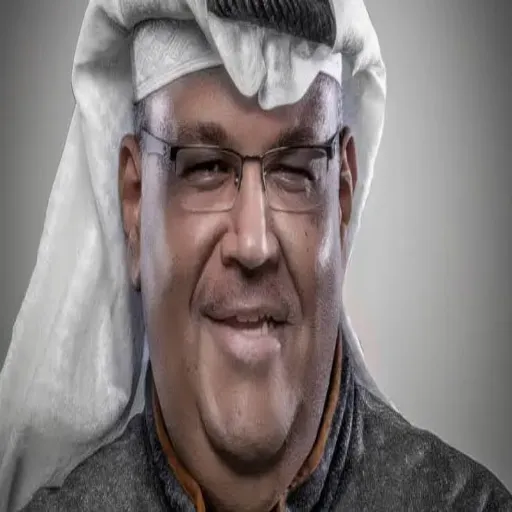
Artist Nabil Shuail
All events of Artist Nabil Shuail
No events found
Artist Nabil Shuail does not have any events scheduled at the moment.

100% protected tickets
If anything happens, we've got you covered.
Nabeel Shuail: The Nightingale of the Gulf and the Voice of Emotion That Crossed Every Border
When modern Gulf tarab and its journey from the local to the pan-Arab is mentioned, the name Nabeel Shuail springs to the front as one of the most important figures who made this transformation. The man nicknamed the "Nightingale of the Arabs" and "Bu Shuail" was not merely a singer who added his voice to the list of his generation's voices, but a complete artistic project that carried the Kuwaiti and Gulf song into the heart of the Arab world, proving that the local dialect is no barrier to reaching millions of listeners from the Atlantic to the Gulf.
The story began in Kuwait in the early 1980s, when he was a young man carrying an extraordinary voice and fingers that played the oud with an early feeling beyond his years. From his first album "Sekat Safar" in 1981, it was clear that this voice was different; it held the tenderness of emotion and the power of tarab at once, along with a rare ability to move between the sorrowful line and the danceable one without losing its identity. Over the years, Nabeel Shuail transformed from a promising singer into an established star, then into a school of singing from which those who came after him learn.
What distinguishes Nabeel Shuail's career is that he was not content with success within the Gulf's borders, but was the first Gulf singer to boldly break the barrier of regionalism, singing in the Egyptian, Lebanese and Moroccan dialects alongside the Gulf one, and offering works that met with wide acceptance in every Arab country his voice reached. This boldness in diversity was not merely an adventure, but a conscious artistic vision through which he realized that a beautiful song transcends geography and dialect, and that the Arab audience seeks honest feeling wherever it is found.
Over more than four decades, Nabeel Shuail enriched the Arabic music library with more than twenty-six albums and hundreds of songs that became part of the collective memory of successive generations. From "Ma Arwaak," which marked a qualitative leap in his career, to "Allah Ya Khofi Alaik," "Aynak Ala Meen," "Lo'bat Al-Ayyam" and "Min Tkoon," he drew for himself a special place as the owner of the emotional song sung in moments of joy and longing alike. His talent also extended to series theme songs, so his voice became tied to Gulf drama works that left their mark on the Arab viewer.
Today, with the major entertainment renaissance witnessed by Saudi Arabia and the Gulf states, Nabeel Shuail has returned strongly to the forefront—honored at times and celebrated at others—confirming that great voices are not folded away by time but made more firmly rooted. For anyone wishing to book tickets to Nabeel Shuail's concerts to follow this voice live, the "FansPass" platform remains the safe destination to view his event dates and reserve a seat.
Nabeel Shuail Ticket Prices and Booking
Nabeel Shuail concert ticket prices vary by city, venue and ticket category, and multiple tiers are usually available to suit different budgets. You can book and buy your tickets securely through the "FansPass" platform as soon as his concert dates are officially announced, choosing the city, category and seat location.
Nabeel Shuail: From the Khaldiya Neighborhood to Gulf Stardom
His full name is Nabeel Suleiman Dawood Shuail Al-Mutairi. He was born in Kuwait in the early 1960s and grew up in the Khaldiya neighborhood within a conservative environment that instilled in him values and discipline. No one expected this quiet child to become one of the Gulf's most famous voices, but his passion for music appeared early; he became attached to the oud and began refining his talent himself until playing became a natural extension of his voice.
The pivotal moment came in 1981, when a friend who owned an artistic production company heard him, was impressed by his voice and offered him the chance to record a musical tape. Nabeel considered this offer a precious, irreplaceable opportunity, presenting a set of emotional songs that met with immediate acceptance, after which he released his first album "Sekat Safar" that same year, announcing the birth of a new star in the sky of Gulf song.
This early success was no coincidence but the fruit of real talent accompanied by determination and passion. From his first steps, Nabeel Shuail realized that the path to hearts passes through honesty in performance and good choice of works, so he was keen for each of his releases to be a step forward rather than a mere repetition of what came before. This early vision is what made his launch strong and steady and paved the way for a long career that never stopped.
The 1980s: Establishing the Star
The 1980s were the real founding phase of Nabeel Shuail's career. During them he released a series of consecutive albums that cemented his popular presence, from "Al-Hob Al-Sadooq" in 1983 to "Lo Yehassalli" in 1985, then "Nawwart" in 1986, "Ana Mansak" in 1987, "Ya Shams" in 1988 and "Elli Maloh Awwal" in 1989. These albums were not merely consecutive releases but calculated steps by which Nabeel built his fan base and proved himself a prolific singer capable of continuously offering new work without losing his shine.
In that phase, the features of his own style took shape, based on blending authentic tarab with emotional feeling, and traditional Gulf melody with modern arrangement. He also began gradually stepping out of the local cloak toward a wider Arab space, paving the way for what would later become his hallmark: the ability to sing in multiple dialects.
An Artist Across Dialects
Among the things that most distinguish Nabeel Shuail from his peers is that he was the first Gulf singer to boldly step out of the boundaries of dialectal regionalism. While many Gulf artists remained faithful to their local dialect, Nabeel chose to sing in the Egyptian, Lebanese and Moroccan dialects alongside the Gulf one, offering works that spread across various Arab countries. This openness made him an artistic bridge between the Gulf and the rest of the Arab world, earning him an audience stretching from Kuwait to Cairo, Beirut and Tunis.
This diversity was not merely a display of ability but an expression of an artistic philosophy Nabeel Shuail believed in—namely that music is a language that transcends borders, and that honest feeling is what reaches hearts regardless of dialect. He was helped in this by his flexible voice and precise musical ear, which enabled him to master the pronunciation of each dialect with striking naturalness.
The 1990s and "Ma Arwaak": A Qualitative Leap
By the 1990s, Nabeel Shuail had become an established name, but he continued to develop rather than settle for what he had achieved. He released the album "Ghanawy" in 1993 and "Rahat wa Qalat" in 1997, before the most important turning point came with the album "Ma Arwaak" in 1998. The song "Ma Arwaak" in particular marked a qualitative leap in his career, achieving wide reach and becoming one of his most famous works ever, cementing his image as the owner of the refined emotional song that combines beauty of melody with depth of lyric.
This phase confirmed that Nabeel Shuail does not fear renewal and that he is able to keep pace with the evolving public taste without compromising his tarab identity. From this foundation he entered the new millennium with confidence, continuing his releases and concerts and keeping his place at the forefront of the Gulf music scene.
The New Millennium and Continuity
The wheel of Nabeel Shuail's giving did not stop with the passage of time; rather, he continued releasing albums and presenting new songs. In 2009 he opened his own recording studio in Kuwait, naming it "Tarban Studio," in a step that reflected his concern for the quality of his works and his direct supervision of their artistic details. His albums followed in this phase, from "Ya Qalb" in 2009 to "Shuail" in 2012, "Mantiqi" in 2014, "Al-Nas Ghair Al-Nas" in 2016, "Farq Al-Sama" in 2019 and "Kabeer Al-Fan" in 2020.
This continuity over more than four decades made Nabeel Shuail a rare case on the music scene; an artist who lived through successive generations of listeners and remained present in the conscience of each generation with new works added to his timeless classic repertoire.
Perhaps what is worth pausing on is that many artists settle for leaning on their old glories after years of success, while Nabeel Shuail chose to remain an active producer offering the new and keeping pace with change. Between his later albums, his ongoing concerts and his participation in major occasions, he proved that true artistic giving is not tied to an age, and that the artist with a message remains capable of renewal as long as he has passion and talent. This is what kept his name present in every conversation about the icons of Gulf tarab who withstood the changing of times and shifting of tastes.
Nabeel Shuail's Albums
Nabeel Shuail has more than twenty-six albums in his artistic record, spanning his long career and forming together a rich log of his artistic development. Among the most prominent of these albums:
- Sekat Safar (1981): His first album, which announced the birth of his star.
- Al-Hob Al-Sadooq (1983): Reinforced his presence in emotional song.
- Lo Yehassalli (1985): One of the important 1980s milestones in his career.
- Nawwart (1986): With it he continued the rise of his popularity.
- Ana Mansak (1987): One of the albums that cemented his name in the Gulf.
- Ya Shams (1988): Its title carried one of his most famous songs.
- Elli Maloh Awwal (1989): With it he closed the 1980s strongly.
- Ghanawy (1993): One of the notable 1990s releases.
- Rahat wa Qalat (1997): Paved the way for the phase of artistic maturity.
- Ma Arwaak (1998): The album that marked a qualitative leap in his journey.
- Ya Qalb (2009): A strong comeback in the new millennium.
- Shuail (2012): Carried his family name and expressed a new phase.
- Mantiqi (2014): Confirmed the continuation of his renewed giving.
- Al-Nas Ghair Al-Nas (2016): One of his successful recent works.
- Farq Al-Sama (2019): With it he continued his contemporary presence.
- Kabeer Al-Fan (2020): A title befitting his standing and career.
Nabeel Shuail's Most Famous Songs
Throughout his career, Nabeel Shuail presented hundreds of songs that became part of Arab memory, but a group of them achieved overwhelming fame and turned into timeless classics. Among the most prominent:
- Ma Arwaak: The song that marked a qualitative leap in 1998, considered one of his most famous works ever.
- Allah Ya Khofi Alaik: One of his emotional masterpieces echoed by audiences everywhere.
- Aynak Ala Meen: An emotional tarab song bearing his own signature.
- Lo'bat Al-Ayyam: One of the works that expressed his school in the heartfelt song.
- Min Tkoon: One of his songs that achieved wide popularity.
- Qoulou Laha: An emotional message in a warm voice that touched hearts.
- Ya Shams La Tgheebi: One of his classics that carried the title of one of his albums.
- Ana Ma Ansak: One of the songs of longing and loyalty in his repertoire.
- Tsafer: One of the emotional works that expressed the anguish of separation.
- Majboor: The song that won the award for best Gulf musical work.
- Jani (2012): One of his recent works that achieved wide reach.
Nabeel Shuail and Series Theme Songs
Alongside his solo songs, Nabeel Shuail's voice became tied to a number of Gulf drama works, singing theme songs for series that left their mark on the Arab viewer, including the series "Thaman Omry" and the series "Dunya Al-Qawi." This dramatic presence added another dimension to his career and confirmed that his voice is able to carry the emotional state a drama requires, so the opening of a series with his voice became a mark that gives it a special warmth for the audience.
The association of his voice with drama also gave some of his songs additional reach, as series theme songs turned into independent works echoed by the audience away from their dramatic context—which reflects Nabeel Shuail's ability to present a song that outlives the work it was tied to. This diversity between the solo song and the drama theme broadened his fan base and added to his record works engraved in memory.
Nabeel Shuail's Singing Style and the Secret of His Distinction
Nabeel Shuail's style rests on a precise equation between authentic tarab and surging emotion; he does not merely sing the words but lives them and gives them an emotional dimension that makes the listener feel they express him personally. He possesses a wide-ranging voice able to move between different registers smoothly and to perform the long tarab line with a steady breath and an unaffected feeling. These vocal tools, alongside his taste in choosing melodies and lyrics, are what created for him a signature difficult to imitate.
Among the most prominent features of his experience is also his ability to balance between preserving his Gulf tarab roots and keeping pace with the evolving public taste. While he remained faithful to the refined emotional song his audience loves, he did not hesitate to introduce modern arrangements and experiment with varied styles, keeping his works close to every new generation. This balance between authenticity and renewal is what enabled him to remain in the front ranks over more than four decades without losing his shine or turning into a mere memory of the past.
Nabeel Shuail and the Oud: The Singer Who Plays
One cannot speak of Nabeel Shuail without pausing at his special relationship with the oud, for he has been known since his beginnings as one who sings while playing himself—an advantage that gave him a deep understanding of the melody's structure and details. This combination of singing and playing was not merely a display but reflected on his manner of performance and his ability to control his musical paths and add his own touches to his works.
This practical musical background also reinforced his presence as a complete artist who oversees the details of his work, which was clearly evident when he opened his own recording studio, "Tarban Studio," in 2009, confirming his concern for the quality of his production and his careful follow-up of everything bearing his name. This attention to artistic detail is one of the secrets of the consistent quality that distinguished his works across their different phases.
Nabeel Shuail's Influence on Gulf Song
Nabeel Shuail's role goes beyond being a successful singer to being one of the names that contributed to shaping the features of modern Gulf song. With his boldness in stepping out of dialectal regionalism, he opened the door for later generations of Gulf artists to think about a wider Arab audience, and proved that Gulf song is able to compete and spread beyond its borders. The abundance of his output and his long continuity also made him a model to emulate in perseverance and development.
His impact remains present on the contemporary scene, whether through the generations influenced by his style or through his classic works that are still re-performed and sung today. When artists from different generations gather to honor him at major occasions, it reflects a collective recognition of his pioneering role and his standing as one of the pillars of Gulf tarab who left an indelible mark.
Nabeel Shuail's Most Notable Concerts and Festivals
Nabeel Shuail's presence was not limited to the studio and albums but extended to the stage, where he performed actual concerts and festivals inside and outside the Gulf. Among his most prominent concerts and appearances:
- The Night of Kuwait's Pulse – Riyadh Season 2025: A tribute evening held on 21 November 2025 at Mohammed Abdo Arena as part of the sixth edition of Riyadh Season, lasting nearly three and a half hours with the participation of artists Ayed Yousef and Mutref Al Mutref, in which Nabeel Shuail performed his most famous works such as "Sekat Safar" and "Rahat wa Qalat."
- Riyadh Boulevard Concert – Kuwaiti National Day: A participation in a major artistic celebration at Riyadh Boulevard alongside a select group of Kuwaiti song stars in celebration of the Kuwaiti National Day.
- Nabeel Shuail and Nawal Al-Kuwaitia Concert in Riyadh: A joint musical evening that brought him together with artist Nawal Al-Kuwaitia before the audience of the Saudi capital.
- February Kuwait Festival 2024: A crowd-drawing concert he performed alongside the Miami band as part of the festival's events.
- Arab Festivals: Throughout his career he took part in major festivals such as the Jerash Festival in Jordan, the Carthage Festival in Tunisia, the Salalah Festival in Oman and the Mawazine Festival in Morocco, in addition to concerts in Dubai, Lebanon and world capitals such as Paris and London.
Nabeel Shuail's concerts are marked by their authentic tarab character that relies on direct interaction with the audience and on his ability to present a complete evening combining his timeless classic works with his recent songs. With the entertainment renaissance witnessed by Saudi Arabia and the Gulf states, he returned to be present at the major seasons and festivals, drawing an audience stretching across generations—from those who lived through his beginnings to the youth who discovered his works recently.
Nabeel Shuail is credited as one of the artists able to fill large stages and keep the audience engaged throughout the evening, thanks to his huge repertoire of songs the audience knows and sings along with him. His concert is not merely a vocal showcase but a journey through the memory of generations, moving between the calm emotional song and the danceable tarab work, making each night a complete experience from which the audience emerges having relived the finest of this voice's career. This is why his concert tickets enjoy great demand whenever a new date is announced in any Gulf city.
Nabeel Shuail's Awards and Honors
Throughout his career, Nabeel Shuail received many awards and honors that crowned his long artistic giving. He won the Golden Album award from Radio Kuwait in 1996, and his song "Majboor" won the award for best Gulf musical work. He also received the Murex d'Or award for best Arab singer, in a wide Arab recognition of his standing and his role in developing Gulf song.
The honors were not limited to artistic awards but extended to symbolic tributes befitting his career; he was honored with the Silver Jubilee at the Egyptian Opera House on the occasion of more than twenty-five years of his artistic giving, and received an honor from the Arab League in Cairo in appreciation of his role in enriching Arabic music. These diverse honors reflect the exceptional standing Nabeel Shuail holds, not in the Gulf alone but across the entire Arab artistic scene.
What is striking is that these honors came from different bodies and countries, confirming that Nabeel Shuail's presence was not confined to his country or region but extended to include major Arab cultural institutions that saw in him a model of the artist who combined talent, commitment and long giving. Every award or honor he received was not merely a recognition of a specific work, but an appreciation of a complete career that contributed to raising the standing of Gulf song and presenting it to the Arab world in its finest form.
Nabeel Shuail's Honoring at Riyadh Season
As part of celebrating major artistic icons, Riyadh Season dedicated a tribute night to artist Nabeel Shuail titled "The Night of Kuwait's Pulse," in celebration of his long journey and his pioneering role in Gulf song. This night came within a series of tributes to the pillars of Gulf tarab, and witnessed a large artistic presence in which names from different generations took part to pay tribute to Bu Shuail.
This honor was not merely a celebration of a rich artistic past, but a confirmation that Nabeel Shuail is still present and influential on the contemporary scene, and that his works find their echo among the new generations. The night also reflected the role played by Saudi entertainment seasons in celebrating the Gulf artistic heritage and re-presenting it to a wide audience in a distinctive festive atmosphere.
Nabeel Shuail and a Stardom That Crosses Generations
Among the rarest things any artist can achieve is to remain beloved by more than one generation at once—something Nabeel Shuail succeeded in with distinction. The generation that lived through his beginnings in the 1980s still keeps his songs in its conscience, while the newer generations discovered his works through digital streaming platforms, re-arrangements and live concerts, finding in them what addresses their taste despite the passing years. This extension across generations is the clearest proof that the value of his works is not tied to a particular time but carries an immortality that transcends the moment.
This renewed presence is reinforced by the fact that Nabeel Shuail's songs are still sung at occasions and gatherings, top the most-listened charts for classic Gulf tarab, and are re-performed by young artists in appreciation of their value. With every new appearance on stage, it is confirmed that "Bu Shuail" is not merely a name from the past but a living icon who continues to influence the Gulf and Arab music scene.
Nabeel Shuail's Personal Life
Alongside his rich artistic career, Nabeel Shuail is known for his keenness to preserve the privacy of his family life away from the spotlight. He married twice; from his first marriage he had his son Shuail, and from his second marriage he had a son and a daughter, Abdulwahab and Zeina. He remained keen to separate his private life from his artistic career, presenting a model of the artist who balances his stardom with his family commitments.
This balance, along with his manners and refinement in dealing with others, earned him wide respect in the artistic and public circles, and made his image tied not only to the beauty of his voice, but also to his calm, composed personality that maintained its standing across decades.
Why Is Nabeel Shuail Nicknamed the "Nightingale of the Arabs"?
Nabeel Shuail earned the nickname "Nightingale of the Arabs" thanks to the sweetness of his voice and his unique ability for tarab performance that combines power and tenderness. His voice possesses a wide range that allows him to move between registers easily, and a high feeling that gives each song a special depth. This nickname was reinforced by his wide Arab reach and his ability to address an audience beyond the Gulf's borders.
After more than four decades of giving, Nabeel Shuail remains one of the pillars of Gulf and Arab tarab, and a complete artistic school that influenced generations of singers. Between his huge record of albums, his timeless songs, his multiple honors and his renewed presence at major seasons, his voice remains a witness to an exceptional career that combined authenticity and renewal, and the local with the pan-Arab.
Frequently Asked Questions About Nabeel Shuail
Who is Nabeel Shuail?
A Kuwaiti singer born in the early 1960s, his full name is Nabeel Suleiman Dawood Shuail Al-Mutairi. He is nicknamed the "Nightingale of the Arabs" and "Bu Shuail," and is considered one of the most prominent pioneers of the emotional and tarab song in the Gulf.
Why is he nicknamed the "Nightingale of the Arabs"?
Because of the sweetness of his voice, his high tarab feeling and his ability to sing in multiple Arab dialects, which made him beloved in various Arab countries.
What are Nabeel Shuail's most famous songs?
Among the most prominent are "Ma Arwaak," "Allah Ya Khofi Alaik," "Aynak Ala Meen," "Lo'bat Al-Ayyam," "Min Tkoon" and "Majboor."
How many albums does Nabeel Shuail have?
He has more than twenty-six albums in his record since his first album "Sekat Safar" in 1981.
What distinguishes Nabeel Shuail from others?
He was the first Gulf singer to break the barrier of regionalism and sing in multiple Arab dialects such as Egyptian, Lebanese and Moroccan alongside the Gulf one.
What are the most notable honors he received?
He won the Golden Album award from Radio Kuwait and the Murex d'Or award, was honored at the Egyptian Opera House and by the Arab League, in addition to his honoring at Riyadh Season.
How can I book tickets to Nabeel Shuail's concerts?
Through the "FansPass" platform as soon as his concert dates are officially announced, where you can choose the city, category and seat location and complete payment securely.