

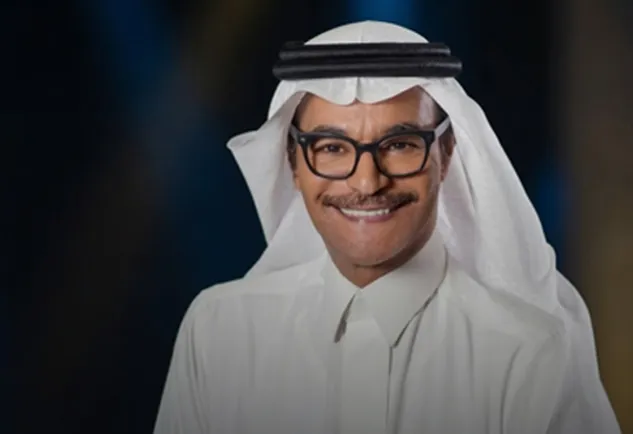
Artist Rabeh Saqer
All events of Artist Rabeh Saqer
No events found
Artist Rabeh Saqer does not have any events scheduled at the moment.

100% protected tickets
If anything happens, we've got you covered.
Rabeh Saqer: The Musician of the Gulf and His Concert Tickets on FansPass
Whenever modern Khaleeji music is discussed, Rabeh Saqer stands out as an artist who created a musical identity entirely his own: a voice that understands longing, a composer who reads the emotion behind every lyric, and a musician who brings a different energy to each moment on stage. That is why Rabeh Saqer concert tickets remain in high demand whenever a new night is announced in Riyadh, Jeddah, Kuwait, or another major Arab city.
The artist known as the “Falcon of Khaleeji Song” has shared a relationship with his audience for more than four decades. His journey has taken him from the modest beginnings of Ya Naseem Al Lail to major arenas and sold-out concert nights. Rabeh Saqer never relied on his voice alone. He built his career through singing, composing, playing instruments, and arranging music, turning every live appearance into an opportunity to hear familiar songs with fresh details that a studio recording cannot fully reproduce.
Rabeh Saqer performed major concerts during January, March, and April 2026 across Riyadh, Kuwait, and Jeddah, and he will continue meeting his audience at future concerts and entertainment seasons as organizers announce new dates. This page is designed to feature events that are available to book, preventing visitors from confusing an upcoming performance with a concert that has already taken place.
If you want to book Rabeh Saqer tickets, search for the available concert on FansPass, then compare seating categories, prices, and locations before paying. Demand for his concerts can rise quickly, so booking early gives you a better chance of finding the category that suits both your budget and the live experience you want.
Rabeh Saqer: A Voice That Built Its Own Musical School
Rabeh Saqer is one of the most prominent figures in Saudi and Gulf music, with a career extending back to the early 1980s. His breakthrough came with Ya Naseem Al Lail, first introduced in 1982, while digital music platforms list the Naseem Al Lail album with a 1983 release date. From that first chapter, he established himself not only as a singer but also as a composer, arranger, and musician with a deep understanding of how every part of a song works.
His knowledge of composition and arrangement shaped a signature that listeners can often recognize from the opening bars. He also contributed to projects by leading Gulf artists. Rotana describes him as one of the stars who helped develop the Arab music scene, while his concerts continue to combine traditional tarab, rhythmic energy, and direct audience interaction.
His repertoire moves between love, longing, national pride, and upbeat Khaleeji rhythms. Songs frequently associated with his live sets include Afhamak, Khalas, Tegdar, Wesh Rayek, Saddiqini, Gharam Atfal, Oyounoh, Al Thahab Asli, and Ya Dar.
Upcoming Rabeh Saqer Concerts
Rabeh Saqer remains a regular presence at major music seasons and concerts in Saudi Arabia and across the Gulf. New dates are added to this page once organizers announce the event and tickets become available. Each active listing should show the city, venue, concert date, and available categories, while expired events are removed so the page remains useful to fans searching for a concert they can actually attend.
The artist performed major nights during January, March, and April 2026 in Riyadh, Kuwait, and Jeddah. Those appearances reflect the breadth of his live circuit and the continuing demand for his concerts. Rather than keeping an expired date inside evergreen content, FansPass displays the next event when it becomes available to book.
How Can You Tell Whether a Concert Is Available to Book?
- An active event page: The concert name, city, and date are clearly displayed.
- Selectable ticket categories: Seats or ticket offers can be added to an order.
- Complete admission details: The listing includes the venue, event time, and delivery method.
- A reviewable final price: You can compare the category and total cost before completing payment.
From the Concert Page to a Confirmed FansPass Booking
When Rabeh Saqer tickets are available on FansPass, follow these steps:
- Open FansPass and search for “Rabeh Saqer” or the concert name.
- Match the city, date, and venue before choosing an offer.
- Review the seating map or category description, then choose your preferred location and quantity.
- Check whether the offer is an original ticket or a listing in the resale marketplace.
- Read the delivery method, door-opening time, and any age or admission restrictions.
- Add a promotional code if available and review the total price after fees.
- Enter your contact details accurately, complete payment, and retain the confirmation and digital ticket.
Choose your next concert night: Browse events on FansPass and search for Rabeh Saqer concerts currently available to book.
Rabeh Saqer Ticket Prices and Categories
There is no single fixed price for a Rabeh Saqer concert. The amount changes according to the city, venue, organizer, row, and distance from the stage. Some previous concerts started at approximately SAR 345–350, but this is only a historical reference and should not be treated as the starting price for a future event.
When a new concert is released, the seating plan may include rear or side sections, seats closer to the stage, premium categories, or hospitality options, depending on the venue. Compare the final price after fees rather than relying only on the first advertised amount. Check the viewing angle and row before assuming that the most expensive category is automatically the best choice for you.
In the resale marketplace, the ticket holder sets the asking price. A resale offer may therefore be above or below the ticket’s original face value. Always confirm the offer type, category, quantity, and delivery process before placing your order.
Choosing the Right Seats for a Rabeh Saqer Concert
For Fans Who Want to Be Close to the Stage
Front sections provide a closer view and make the interaction with the artist feel more immediate. They are also commonly among the highest-demand and most expensive options. Check the angle carefully, because a seat very close to one side of the stage may not offer the clearest view of the full band or central screens.
For a Balanced View and Sound
Central sections facing the stage often offer a strong balance between sound and visibility. They may be farther away, but they allow you to appreciate the lighting, orchestra, stage design, and screens as one complete production.
For Families and Groups
The presence of multiple tickets in one listing does not automatically mean that the seats are together. Match the section, row, and seat numbers, and look for an explicit statement confirming adjacency. Completing the group booking in one order is usually preferable because availability can change between separate transactions.
Why Fans Value a Clear Booking Journey on FansPass
High-demand concerts may require a quick decision, but speed should never mean overlooking the details. A structured event page keeps the essential information in one place, allowing you to understand what you are buying and how it will be delivered before transferring any money.
- Specific event information: Concert name, city, date, category, and ticket quantity.
- A visible total: The opportunity to review the cost before confirming payment.
- Options based on availability: Original tickets or eligible resale listings may appear.
- Organized delivery: Digital details connected to an order rather than files exchanged through unknown private messages.
- A record for follow-up: An order number and account details that can be referenced if assistance is needed.
Before the Concert: A Practical Checklist
- Review the full date and do not confuse the ticket-release announcement with the actual concert day.
- Confirm both the venue and city, as Rabeh Saqer may perform more than one concert within a short period.
- Check the door-opening time separately from the scheduled performance time.
- Read the age policy and rules for children for each individual event.
- Confirm seat adjacency before paying, especially when purchasing two or more tickets.
- Download the ticket to your phone in advance and never post its barcode or QR code on social media.
- Allow extra time for parking, security checks, and finding the correct entrance.
- Avoid shortened links or sellers requesting a direct transfer outside the platform.
- Keep travel arrangements flexible until the event date and ticket order are confirmed.
If Your Plans Change After Booking
If your ticket is eligible, you may be able to list it in the FansPass resale marketplace. Start from your account, select the selling option, choose the concert, enter the category and requested information, upload the original ticket file, set the price, and publish the listing according to the applicable terms.
Never display the barcode or QR code in a public image, and do not deliver a ticket or accept payment outside the approved process. Transfer, resale, and refund eligibility can vary from one event to another, so read the concert-specific conditions before buying.
Milestones That Shaped Rabeh Saqer’s Career
Ya Naseem Al Lail and the Early 1980s
Rabeh Saqer began his professional journey at a young age. The Ya Naseem Al Lail album introduced his voice and compositions to a wider audience. The project drew attention despite limited resources, and Sabreen followed, expanding his audience across the Gulf music scene.
An Artist Behind the Microphone and the Arrangement Desk
Rabeh Saqer did not build his standing through singing alone. He worked in composition, arrangement, and musical supervision, contributing his experience to projects by artists such as Abadi Al Johar, Abdul Majeed Abdullah, Nawal Al Kuwaitia, and others. That experience gave him a distinctive ability to reshape his own songs in concert through renewed live arrangements.
The Concert as a Space for Renewal
His concert set lists combine early songs with recent releases, moving between upbeat rhythms, romantic material, and national songs. One of his major Riyadh nights featured approximately 30 works, illustrating the depth of his catalogue and his ability to construct a long, varied performance.
Rabeh Saqer’s Journey from Al Ahsa to the Gulf’s Major Stages
Rabeh Saqer’s story did not begin in a large studio or with a promotional campaign designed to guarantee success. It began with a young musician from Saudi Arabia’s Eastern Province who loved music and tried to create his own opportunity. He grew up in Al Ahsa, a region rich in folk traditions and local rhythms, and showed an early interest in singing and playing instruments. By the late 1970s, he was performing at youth gatherings in Al Oyoun before moving from that local circle toward recordings that listeners in other regions could hear.
When he introduced Ya Naseem Al Lail in the early 1980s, he was betting on his voice, melodies, and choices rather than relying on an established name to carry him into the spotlight. The album included songs in formal Arabic and gave listeners their first clear image of an artist determined to build a complete musical project. Sabreen then confirmed that his first success was not an accident and that this emerging voice could attract an audience waiting for the next release.
The road was not always straightforward. Rabeh Saqer went through periods when album production slowed, and after Rabeh 96, he spent several years without releasing a new studio album. Accounts of his career indicate that he considered retirement during that time, but encouragement from fellow artists, including Mohammed Abdu, and the loyalty of his audience helped persuade him to continue. His absence from album releases was not an absence from music: he remained active in composition, arrangement, and supervision for other artists before returning to his own catalogue with renewed energy.
His comeback at the beginning of the new millennium became an important turning point. In 2002, he returned with a large collection of songs, and subsequent releases strengthened his position among the region’s leading artists. He did not approach the comeback as an attempt to recreate the past. Instead, he began a more mature chapter combining studio experience with a willingness to experiment, opening his work to a new generation of listeners.
The 1980s: Establishing His Voice and Identity
The 1980s represent the foundation of Rabeh Saqer’s artistic identity. After Ya Naseem Al Lail and Sabreen, he continued searching for a form that could combine Saudi song traditions with broader musical arrangements. The 1986 album Ana Wel Lail included works such as Sarkha and Jisr Al Khair, the latter associated with the opening of the King Fahd Causeway. These works demonstrated his early ability to move between romantic material and national occasions without losing his identity.
His voice was still developing through experience, but its core qualities were already evident: an unaffected delivery, a strong sense of rhythm, and close attention to the details surrounding the lyric. For him, the melody was never merely a background for the vocal. It was part of the story, beginning with an introduction that had a character of its own, moving through musical phrases, and leaving room for the instruments to enter into dialogue with the singer.
This perspective helped him move beyond the conventional image of a vocalist dependent on separate writers, composers, and arrangers. He could understand a song from the inside and reshape an idea to suit both his voice and its eventual life on stage. Over time, this knowledge became one of the principal reasons his concerts felt different: the audience was not hearing a perfect copy of the recording, but a performance being formed again in front of them.
The 1990s: A Broader Musical Vision and a Period Away
Rabeh Saqer entered the 1990s as an established Gulf name and continued releasing work that strengthened his connection with listeners. Rabeh 96 became an important milestone, but circumstances then kept him from releasing another album for approximately five years. The pause was a serious test for an artist accustomed to measuring his relationship with the public through a new song and a new concert.
Rather than leaving the music scene, he redirected part of his energy toward work behind the scenes. He supervised and contributed to arrangements for major artists, including Abdul Majeed Abdullah’s Ghali and Najwa Karam’s Ma Hada La Hada, in addition to projects connected with other Gulf voices. This period broadened his experience with different vocal ranges and musical schools, and the results returned to his personal work when he resumed releasing albums.
These years gave Rabeh Saqer something beyond fame: the perspective of a music producer who sees an album as one complete unit. His comeback therefore carried a clearer understanding of track sequencing, rhythmic variety, the role of each instrument, and how a listener can move from one emotional state to another without feeling that the album is merely a collection of unrelated songs.
The Return in the New Millennium
When Rabeh Saqer returned with a new album in 2002, he did not offer one or two songs to test the market. He returned with a broad set of material that showed his time away had not reduced his desire to work. Over the following years, he released several albums containing dozens of songs and regained his position in an industry being reshaped by changing production methods, listening habits, and emerging tastes.
The comeback succeeded because he retained his core identity while updating the sound around it. Khaleeji melody remained central, but the arrangements became more flexible in their use of contemporary rhythms and instruments. He continued to give a song time to develop when the idea required it, while also producing direct, energetic works that quickly settled into the audience’s memory.
As the industry moved from cassette tapes and compact discs to digital platforms, his catalogue remained open to rediscovery. A new listener can begin with his recent releases and then travel back to Naseem Al Lail or his work from the 1980s and 1990s, hearing the production and voice change while the musical personality remains intact. That continuity gives his concerts a multigenerational audience, bringing together fans who experienced the early years and listeners who discovered him through streaming platforms.
Rabeh Saqer the Composer and Music Arranger
Rabeh Saqer’s importance cannot be fully understood through a list of his songs alone. He is a musician who participates in shaping the final form of a work. He understands how to construct an introduction, when to leave space for oud or rhythm, and how to move between musical ideas in service of the emotion rather than turning technical display into an end in itself. This is why he is frequently described as the “Musician of the Gulf,” a title connected as much to his work within composition and arrangement as to his voice.
His signature extended to other singers. He contributed to work by Abadi Al Johar, Abdul Majeed Abdullah, Nawal Al Kuwaitia, Rashed Al Majed, and others through composition, arrangement, or musical supervision. His collaborations with Nawal produced songs such as Tedri Wella Ma Tedri, Nassani, and Hed Balak. The two later came together for the duet Kol Ma Fil Amr, composed by Rabeh, confirming the compatibility between his musical sensibility and her vocal range.
His value is equally apparent when he works with a melody written by another artist. A skilled arranger does not overpower the original idea; he reveals its layers and gives it clearer movement. Musical commentary on Abadi Al Johar’s Tal Al Sokoot has highlighted Rabeh Saqer’s ability to modernize the sound while preserving the spirit of Abadi’s melodic phrases, a task requiring both knowledge and artistic restraint.
This experience translates directly to the stage. Rabeh Saqer does not treat the band as a fixed accompaniment. He guides transitions, interacts with musicians, and adjusts musical spaces according to the character of the night. Fans may therefore choose to attend more than one concert because the same song can carry a different introduction, an extended instrumental passage, or a spontaneous interaction that will not be reproduced in exactly the same way.
What Makes Rabeh Saqer’s Voice and Style Distinctive?
Rabeh Saqer has a voice capable of combining strength and flexibility, but he does not depend on vocal display alone. Much of his appeal comes from his command of rhythm and timing, and from the way he stresses or softens a word to shift the meaning of a phrase. In melancholy songs, the delivery feels close and direct. In rhythmic material, he leads the audience without losing musical precision.
His introductions often have a clear structure that makes a song recognizable before the lyric begins. Oud, keyboard, or a string phrase may establish the mood before the rhythm enters gradually. This attention to introductions is especially powerful in concert: the audience identifies the song from its earliest signals and begins reacting before he sings the first line.
He also delivers Gulf Arabic lyrics with warmth and clarity while respecting the weight and detail of the text. He does not force a melody onto the words; he generally looks for a phrase that allows their meaning to arrive naturally. In national songs, the musical structure rises and the chorus and rhythm become more prominent. In romantic material, he leaves greater space for the voice, the phrase, and the pauses between them.
Why Is a Rabeh Saqer Concert Different from Listening to an Album?
A Rabeh Saqer concert is not simply a live playback of familiar songs. It is a journey in which the tempo and emotional atmosphere keep changing. He may begin with an energetic song to open the door to audience participation, move into a sequence of emotional works, and later return to rhythms that invite the entire venue to sing. His extensive catalogue allows him to build different paths through a concert depending on the occasion and city.
Musical improvisation is present in many performances, whether through an extended introduction, the repetition of a section the audience loves, or an instrumental passage for the band. Communication with the crowd is also part of the experience. He listens to requests, may respond with a song that was not originally in the planned set, and sometimes repeats a passage when collective singing fills the venue.
This is why your preferred seating location depends on what you want from the night. Seats close to the stage suit fans interested in the details of performance and visual interaction. Central seats facing the stage provide a wider view of the lighting, musicians, and screens. In either case, sound quality and viewing angle matter more than the category name alone.
Rabeh Saqer and the Saudi National Song
Alongside love songs and emotional ballads, national music holds a clear place in Rabeh Saqer’s career. He has released work connected with Saudi Arabia and its national occasions, including enduring songs such as Ya Dar and Enta Malik, as well as the earlier Jisr Al Khair. These works blend energetic composition with language close to the audience, which is why they regularly return during celebrations and national events.
His experience in this style is evident in the way he raises the emotion without reducing the song to a direct statement. Rhythm, chorus, and melodic progression build participation, turning the performance into a collective moment in which the audience joins the words. The Saudi Music Commission has documented the notation of Enta Malik, composed and performed by Rabeh Saqer, in a publication dedicated to Saudi music.
Rabeh Saqer and a Multigenerational Audience
Few artists who began in the cassette era retain a strong presence among digital-platform listeners without losing their original audience. Rabeh Saqer achieved this because his project did not stop at one successful period. Each generation found a different entrance: some connected with the songs of the 1980s, others with his albums after the millennium comeback, while younger listeners arrived through live clips, streaming platforms, and major seasonal concerts.
Concerts strengthen that link between generations. When he performs an older work with a fresh arrangement, the longtime listener recovers a memory attached to the song while a younger fan can hear it as though it were contemporary. When he moves to a newer track, it does not feel disconnected from the past because his method of composition and performance remains the thread joining every stage.
This enduring popularity helps explain the demand for Rabeh Saqer concert tickets, particularly for major nights and seats close to the stage. It also makes early planning valuable: choose the city, set a budget, review the seating map, and monitor the ticket release rather than waiting until the last moment.
Famous Rabeh Saqer Songs Fans Hope to Hear Live
There is no fixed set list for every concert, but audiences usually anticipate a mix of early classics and recent work. Songs widely associated with his performances include:
- Afhamak
- Tegdar
- Khalas
- Saddiqini
- Gharam Atfal
- Wesh Rayek
- Al Thahab Asli
- Oyounoh
- Sara Al Lail
- Ya Dar
- Naseem Al Lail
The final set list remains the choice of the artist and his team and may vary according to the city, occasion, and length of the concert.
Frequently Asked Questions About Rabeh Saqer Concert Tickets
How Can I Find the Next Rabeh Saqer Concert?
New Rabeh Saqer concerts appear in the event listings once the city, venue, and date are announced and ticket sales begin. Check the artist’s events on FansPass for dates currently available to book.
Where Can I Buy Rabeh Saqer Tickets?
Search for the artist or concert name on FansPass, then match the city, date, and category before paying.
How Much Do Rabeh Saqer Tickets Cost?
Prices vary by concert. Some previous events started at approximately SAR 345–350, but the actual price depends on the city, venue, category, and availability.
Which Cities Host Rabeh Saqer Concerts?
Rabeh Saqer regularly appears in Riyadh, Jeddah, and other Saudi cities, as well as Kuwait, Dubai, Bahrain, and other Gulf and Arab destinations depending on the announced program.
Are Concert Tickets Refundable?
Each concert has its own terms. Some events state that tickets are non-refundable, so read the policy before completing the order.
How Can I Confirm That Seats Are Together?
Check the section, row, and seat numbers and look for a clear statement confirming adjacency. The presence of two tickets in a listing is not enough by itself.
Can I Buy Multiple Tickets in One Order?
Yes, if inventory and the event’s purchase limit allow it. One order is usually better for groups seeking adjacent seats.
When Will My Concert Ticket Arrive?
The event page explains the delivery method and timing. Keep the confirmation and monitor the email address registered to your account.
Can I Resell My Ticket If I Cannot Attend?
An eligible ticket may be listed in the FansPass resale marketplace according to the platform and event terms.
What Is the Difference Between Face Value and a Resale Price?
The original issuer sets the face value. A ticket holder sets the resale asking price, which may be above or below the original amount depending on demand and availability.
Does Every Attendee Need a Ticket?
The rules are set for each event, but concerts generally require a separate ticket for every attendee. Review the age and admission policy before buying.
Are There Age Restrictions?
Restrictions may vary by concert. Check the event description before purchasing a ticket for a child or minor.
When Do the Venue Doors Open?
The door-opening time appears on the individual event page. Do not assume it is the same as the concert start time.
Do I Need to Print My Ticket?
Follow the event instructions. If digital entry is accepted, download the file in advance and increase your screen brightness at the gate.
What Should I Do If the Concert Date Changes?
Follow messages from the organizer and the platform connected to your order, and keep travel plans flexible until the schedule is confirmed.
How Can I Avoid Unreliable Tickets?
Use a recognized booking page, protect your payment information, and never transfer money to an unknown account outside the platform.